 Tue, 02 Jun 2026
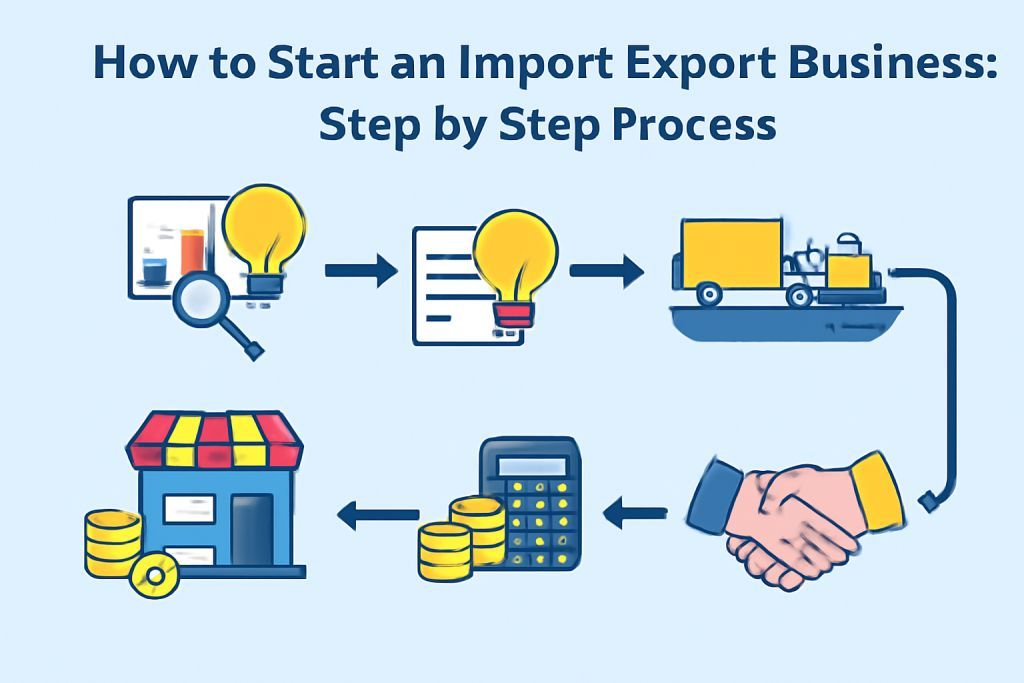
How to Start an Import Export Business: Step-by-Step Process


Most guides on starting an import export business read like they were written by someone who has never actually done it. Generic eight-step frameworks, vague advice about "market research," and a list of obvious documents you could find on any government website.
This one tries to be more useful than that.
The steps below cover what you actually need - in the order you actually need them. And before getting into the process, one question worth answering first.
Which Side Are You On?
You're an Importer if...
You're looking to buy products from India and bring them to your market - the US, EU, Middle East, Southeast Asia, or Africa. Navi Exports connects you with verified Indian exporters across 51 categories, from Agriculture and Textiles to Gems, Chemicals, and Automobile Parts.
Register as Importer →You're an Exporter if...
You manufacture or source products in India and want to sell internationally. List your products on Navi Exports and reach buyers across 20+ countries - without cold-calling or attending expensive trade fairs before you're ready.
Register as Exporter →Now, the actual process.
Step 1: Decide What You're Trading - and Why It Will Sell
Market research sounds obvious. It's also where most first-timers skip ahead and regret it.
The question isn't just "is there demand for this product." It's whether the demand is large enough, in the right markets, at a price that makes the trade economics work after freight, duties, and your margin. Those three things together are what you're actually researching.
For buyers looking at India specifically, the categories with the most developed export infrastructure - and therefore the easiest entry are:
- Agriculture & Food - spices, rice, pulses, organic produce. High demand in Middle East, EU, and US markets.
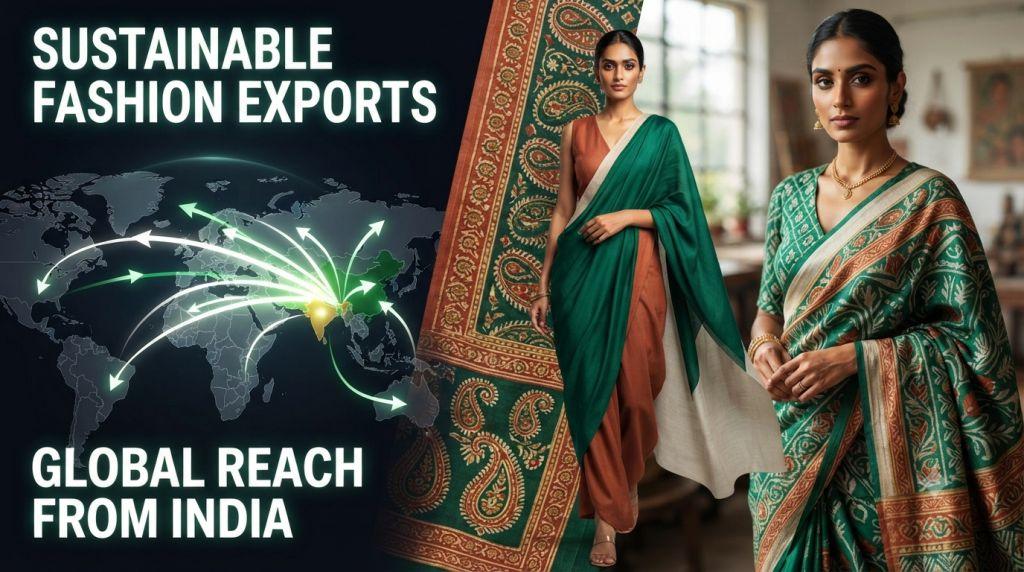
- Apparel & Accessories - garments, knitwear, embroidered fashion. India ranked third in the 2024 USFIA survey as a sourcing base for US fashion companies.
- Gems & Jewelry - India cuts and polishes over 90% of the world's diamonds. Large supplier base at multiple price points.
- Chemicals & Pharmaceuticals - India is the world's third-largest pharmaceutical producer. APIs, generics, and agrochemicals are in consistent international demand.
- Automobile Parts - $22.9 billion exported in FY25. OEM and aftermarket buyers across the US and Europe source regularly from Indian manufacturers.
- Textile Products & Fabric - cotton, silk, synthetic. India is the world's largest cotton producer and a major textile exporter.
Browse all 51 export categories on Navi Exports →
Tools worth using for research: DGFT trade data portal, APEDA export statistics, UN Comtrade for destination country import data, and the USFIA benchmarking surveys for apparel specifically.
Step 2: Write a Business Plan That's Actually Useful
A business plan for import-export doesn't need to be 50 pages. It needs to answer four questions clearly:
- What are you selling, to whom, and at what price? Be specific. "Organic spices to health food retailers in Germany" is a plan. "Food products to Europe" is not.
- Where is the product coming from and how is it getting there? Supplier, freight route, customs process, lead time.
- What does the money look like? Cost of goods, freight, duties, your margin. If the math doesn't work on paper, it won't work in practice.
- What could go wrong and how will you handle it? Currency risk, supplier failure, customs delays. Trade has real operational risks. Acknowledge them.
If you need external funding or are approaching an investor, expand each section. For a bootstrapped first shipment, keep it tight and actually use it - a plan nobody reads is worse than no plan.
Step 3: Register Your Business and Get Your IEC
For Indian exporters, this is the non-negotiable starting point. For international importers, this is what to confirm your Indian suppliers have before placing any order.
Business registration - Sole proprietorship, LLP, or Private Limited Company. Most first-time exporters use LLP for the balance of simplicity and credibility. Private Limited is worth considering if you plan to raise external funding or if large international buyers require it for vendor qualification.
IEC (Import Export Code) - 10-digit code from DGFT. Rs 500, fully online, no renewal needed. Without it: no shipment moves, no foreign payment clears, no government export incentive applies. This is genuinely step one for Indian exporters. Apply at dgft.gov.in.
GST registration - Mandatory for businesses above the turnover threshold. The good news: exports are zero-rated under GST, so you're either exporting under a Letter of Undertaking (no GST upfront) or claiming a refund via the IGST route. The LUT route is cleaner for working capital.
RCMC (Registration Cum Membership Certificate) - From the relevant export promotion council for your product category. This unlocks government export incentives, trade fair participation, and market development assistance. AEPC for garments, TEXPROCIL for cotton textiles, APEDA for agricultural products, EPCH for handicrafts.
Special permits - Pharmaceuticals, food, chemicals, and certain agricultural products need category-specific certifications beyond IEC. Check with FSSAI for food exports, CDSCO for pharmaceutical exports, and the relevant state agricultural authority for fresh produce.
Step 4: Build Your Supply Chain
This is where the business actually runs or fails.
Freight forwarder - Use one for your first shipment. They handle booking cargo, preparing documentation, coordinating customs clearance at both ends, and navigating the things you don't know you don't know yet. The cost is worth it early on.
Shipping method - Sea freight for large volumes where time isn't critical (standard for most B2B trade). Air freight for small, high-value, or time-sensitive goods - significantly more expensive per kg. For first shipments, sea freight is usually the right call unless the goods are perishable or extremely high-value.
Incoterms - These define who is responsible for freight, insurance, and customs at each stage of the journey. The most common for Indian exports:
- FOB (Free on Board) - Seller covers costs up to the origin port. Buyer takes responsibility from there.
- CIF (Cost, Insurance, Freight) - Seller covers freight and insurance to the destination port. Buyer handles import customs.
- DDP (Delivered Duty Paid) - Seller handles everything including import duties at destination. Most expensive and complex for the seller.
For a first export from India, FOB is the most common starting point for both parties.
Step 5: Find Suppliers and Buyers
The honest answer is that finding reliable trading partners is the hardest part of this business - and the part most guides gloss over with advice to "attend trade fairs."
Here's what actually works:
For importers finding Indian suppliers - Navi Exports lists verified Indian exporters across all major categories. Browse by product category, check exporter profiles, and send enquiries directly. Export promotion councils also run verified buyer-seller meets - AEPC for apparel, TEXPROCIL for textiles, APEDA for agricultural products.
For Indian exporters finding international buyers - Trade fairs are worth it once you're established but expensive for a first-time exporter. Start with B2B platforms to build your first relationships at lower cost. List on Navi Exports to be discoverable by international buyers actively searching for Indian suppliers in your category. Register as an exporter here.
Verification matters both ways - Check supplier credentials (IEC, RCMC, certifications). Ask for references from other buyers. For large orders, a third-party factory audit is worth the cost. Equally, as a supplier, verify that an importer is legitimate before shipping against open account terms.
Ready to find your first trade partner?
Navi Exports connects verified Indian exporters with importers across 20+ countries. Browse 51 product categories and send enquiries directly.
Step 6: Manage Payments and Currency Risk
International trade payments are more complex than domestic ones - different currencies, different legal systems, and counterparties you may have never met in person.
Letter of Credit (LC) - The bank guarantees payment once the terms are met and shipping documents are presented. Most secure for both parties on a first transaction. Adds cost and processing time, but worth it until trust is established.
Advance payment - Full or partial payment before shipment. Safe for the seller, risky for the buyer. Common for small orders where the LC cost isn't justified.
Open account - Goods ship, payment comes later. Only use this with buyers you've traded with successfully for a meaningful period. Do not offer open account terms to a new buyer regardless of how large or credible they appear.
Currency management - If you're an Indian exporter getting paid in USD or EUR, your actual INR revenue depends on the exchange rate at the time of conversion. Forward contracts let you lock in a rate and eliminate that uncertainty. Ask your AD (Authorised Dealer) bank about export forward contracts - most major banks offer them.
Export finance — Indian exporters can access Packing Credit in Foreign Currency (PCFC) at below-market interest rates. The Interest Equalisation Scheme provides additional interest subvention (3% for MSMEs). If working capital is tight between order and payment, talk to your bank about pre-shipment finance before your first large order.
Step 7: Stay Compliant - It's Ongoing, Not a One-Time Task
Trade compliance isn't just the registration phase. Regulations change, tariffs shift, and countries update their import requirements. A few things worth building into how you operate:
RoSCTL and RoDTEP - Indian garment exporters should be claiming RoSCTL (5.5–7% rebate on FOB value). Other exporters should check RoDTEP rates for their HS codes. These are real margin improvements, not administrative details.
HS codes - Get yours right before your first shipment. Textile HS codes span chapters 50–63. Wrong classification means wrong duty rate and potential customs delays. Your freight forwarder or RCMC council can confirm the right code.
Record keeping - Keep shipment records, invoices, and customs documents for at least 5 years. GST audit requirements and export incentive claims both require documentation going back several years.
ICEGATE registration - All Indian export documentation (shipping bills, duty drawback claims) goes through ICEGATE, India's customs EDI gateway. Your IEC links to your ICEGATE profile. Register at icegate.gov.in.
What Most First-Time Exporters Get Wrong
A few things that come up repeatedly:
Skipping the freight forwarder to save money - The learning curve on customs documentation is steep and mistakes cause delays that cost more than the forwarder would have. Use one for the first shipment.
Underestimating lead time - Indian exporters typically need 60–90 days from confirmed order to shipment for manufactured goods. Plan seasonal orders accordingly. Buyers who assume 30 days and discover 75 days cause real problems for both sides.
Not checking certification requirements before quoting - EU buyers may require OEKO-TEX, GOTS, or REACH compliance. US buyers may need CPSC certification for children's products. Finding out after the order is placed means either expensive last-minute certification or lost business.
Treating the first shipment as a test and the payment terms as negotiable — Get the payment terms right from the start. LC or advance for new relationships. Open account only for proven partners.
Start your import export journey on Navi Exports
Connect with verified Indian exporters across 51 categories - or list your products and reach buyers in 20+ countries. Free registration.
Frequently Asked Questions
IEC registration costs Rs 500. Business registration (LLP) costs roughly Rs 5,000-10,000 in government fees plus professional charges. RCMC registration varies by council - AEPC charges Rs 1,000 entry fee and Rs 8,000 annually for registered exporters. The total legal setup cost is well under Rs 50,000 for most exporters. The real cost is working capital for the first shipment.
No. IEC requires a registered address but it doesn't need to be a commercial office. Many first-time exporters start from a home office or shared workspace. What matters more is having reliable internet, a GST-registered entity, and an AD bank account.
Products with an established export ecosystem - textiles, spices, handicrafts, garments - are easier to start with because the freight routes, certification requirements, and buyer relationships are well-developed. High-value products (gems, pharmaceuticals) have higher margins but more complex compliance requirements. Start with something where the supply chain is already working and your job is to plug into it.
Verified B2B platforms like Navi Exports are a practical starting point. Export promotion council buyer-seller meets are worth attending - the buyers in the room are there specifically for Indian product. Trade fairs make sense once you have a few clients and can afford the exhibit cost. List your products on Navi Exports here.
Exports are zero-rated under GST - meaning no GST applies to the exported goods. You either export under a Letter of Undertaking (LUT) without paying GST, or you pay IGST and claim a refund. The LUT route is simpler for working capital management. Apply for your LUT on the GST portal annually before your export season.