 Wed, 05 Aug 2026
What is Import and Export? A Beginners Guide


Every product you buy that wasn't made in your country got there through import and export. That's it. That's the whole concept.
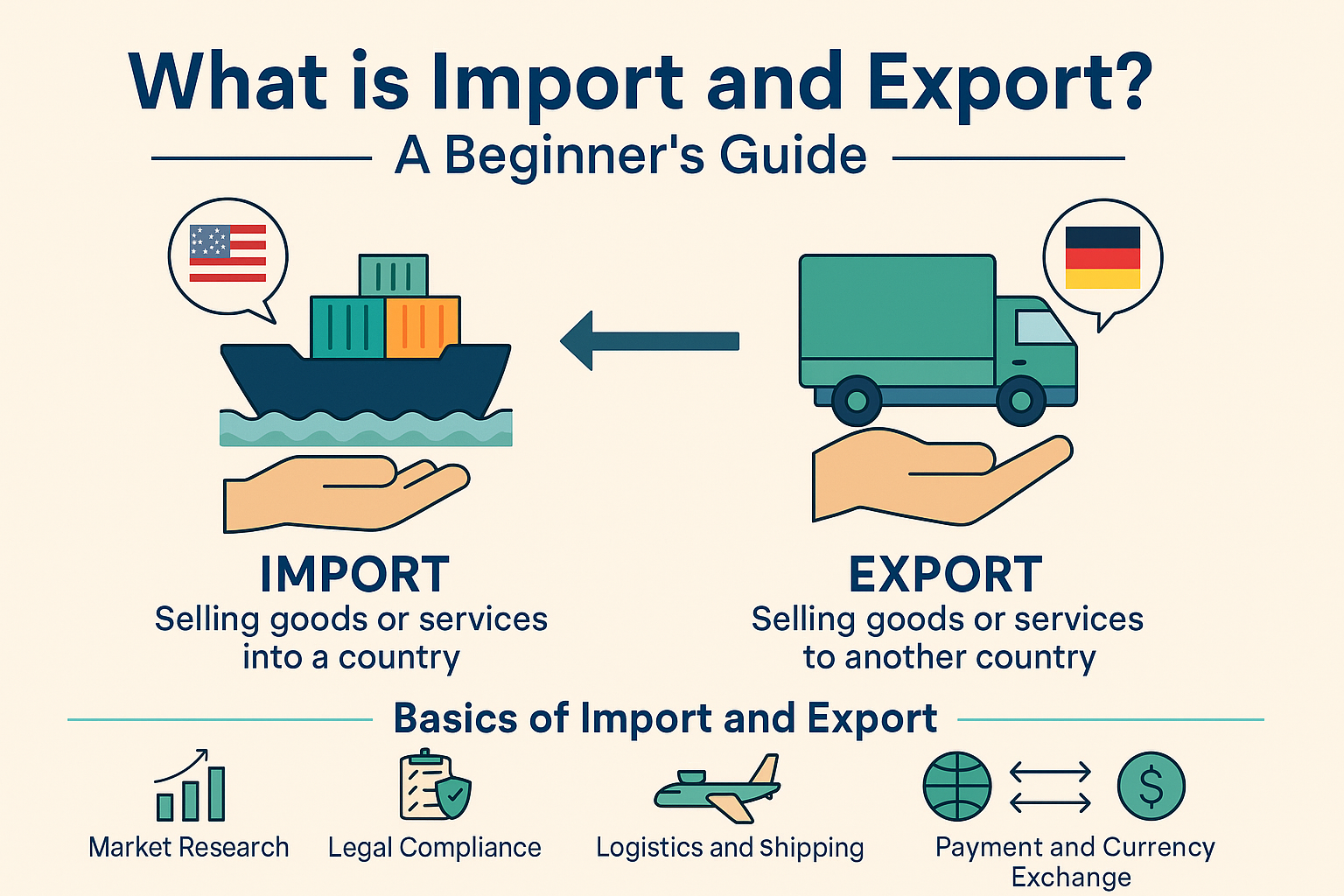
Import is buying goods from another country. Export is selling goods to another country. The rest - the paperwork, the freight, the payments - is process. Worth knowing, but secondary.
If you're here because you want to understand how trade works, you'll find that below. If you're looking to source products from India or list Indian goods for international sale, skip ahead to the section on India - it's the part that's actually useful.
The Basics
Import: A company or individual brings goods into their country from abroad. The US importing Alphonso mangoes from India. Germany importing basmati rice. The UAE importing cotton fabric for textile manufacturing.
Export: A company sends goods to a foreign buyer. An Indian spice manufacturer selling to UK retailers. A Jaipur jewelry maker supplying US boutiques. A Tirupur knitwear factory filling orders for European fashion brands.
Both happen simultaneously, all the time, between every country. They're not separate industries - they're two sides of the same transaction.
Import vs Export: Quick Reference
| Factor | Import | Export |
|---|---|---|
| Direction | Goods come into the country | Goods go out of the country |
| Who initiates | A domestic buyer or business | A domestic seller or manufacturer |
| Example | India importing crude oil from the Middle East | India exporting textiles to the US |
For a full breakdown of every distinction, including taxes, incentives, and documentation, see our detailed comparison of import vs export.
Why Countries Trade at All
Three reasons, and they've been true since trade began.
Some things aren't made everywhere. India grows cardamom. Brazil grows coffee. Saudi Arabia has oil. Japan has consumer electronics manufacturing infrastructure. No country has everything, so every country trades.
Some things are cheaper elsewhere. Even when a country can make something, it might make sense to import it. Manufacturing costs, labor rates, raw material access - these vary enormously by country.
Specialization works. When a country focuses on what it's genuinely good at and trades for the rest, both sides of the transaction come out ahead. This is why India dominates in textiles and gems, Germany in machinery, and Vietnam in electronics assembly.
How India Fits Into Global Trade
India exported $750 billion in goods and services in FY2024-25. That makes India one of the world's significant export economies - and for international buyers, it means access to a large, verified supplier base across a wide range of product categories.
Here's what's actually available from India, by category:
- Agriculture & Food - Spices, rice, pulses, fresh produce, processed foods, organic commodities. India is among the world's largest producers of several staple crops and one of the top spice exporters globally.
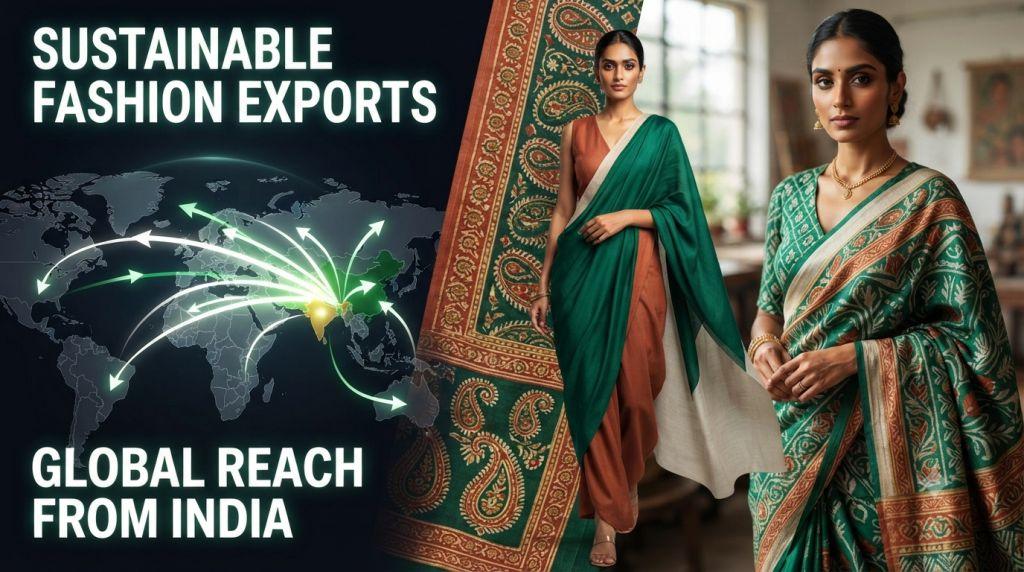
- Apparel & Accessories - Garments, knitwear, embroidered fashion, ethnic wear. India ranked third in the 2024 USFIA survey as the most-used apparel sourcing base for US fashion companies. Tirupur for volume knitwear. Jaipur for handblock print. Delhi NCR for western fashion.
- Gems & Jewelry - India cuts and polishes over 90% of the world's diamonds. Gold jewelry, silver, gemstone-set pieces, fashion jewelry - one of India's largest export categories.
- Automobile Parts - India's auto component sector exported $22.9 billion in FY25. Engine components, braking systems, electrical parts, body and chassis - supplied to OEM and aftermarket buyers across the US and Europe.
- Chemicals - Pharmaceuticals, agrochemicals, specialty chemicals, dyes. India is the world's third-largest pharmaceutical producer and supplies APIs to over 200 countries.
- Textile Products & Fabric - Cotton, silk, synthetic, technical textiles. India is the world's largest cotton producer and the second-largest textile manufacturer.
- Industrial Equipment & Tools - Machine tools, pumps, compressors, valves, agricultural machinery. India's engineering exports reach buyers in over 100 countries.
- Gelatin Products - Top gelatin exporters, manufacturers and its products
Browse all 51 export categories on Navi Exports →
Looking for verified Indian exporters?
Navi Exports connects international buyers with verified Indian suppliers across 51 product categories. Register free.
The Process - What Actually Happens
If you're planning to import or export for the first time, this is the sequence. If you want the full walkthrough, see our step-by-step guide to starting an import-export business.
1. Find your product and supplier
Trade fairs, sourcing platforms, industry referrals - all are used. For India specifically, platforms like Navi Exports list verified Indian exporters by category so buyers can compare directly without cold-calling factories. Browse by category here.
2. Sort the legal requirements
Most countries require exporters to hold an Import Export Code (IEC) - a 10-digit registration from India's Directorate General of Foreign Trade (DGFT). Some product categories (pharmaceuticals, food, chemicals) need additional permits on top of that.
3. Agree on terms
Price, quantity, delivery schedule, payment method. Incoterms matter here - FOB (Free on Board) means the seller covers costs up to the port; CIF (Cost, Insurance, Freight) means they cover shipping to the destination port. These aren't just jargon - they determine who pays what when something goes wrong.
4. Handle the paperwork
| Document | What it does |
|---|---|
| Commercial Invoice | The formal bill — price, quantity, description |
| Packing List | Detailed breakdown of what's in each package |
| Bill of Lading / Airway Bill | Proof that cargo was shipped |
| Certificate of Origin | Confirms where goods were made |
| Insurance Certificate | Covers loss or damage in transit |
5. Manage the payment
Letter of Credit is the safest method for first-time trade - the bank guarantees payment once terms are met. Advance payment works when you trust the supplier. Open account (pay after delivery) is only used in established relationships. For a first shipment from India, Letter of Credit or partial advance payment is standard.
6. Clear customs
Both countries need customs clearance. Freight forwarders handle this in most cases - it's worth using one for your first shipment rather than learning customs filing under time pressure.
Ready to start sourcing from India?
Join thousands of verified exporters and importers on Navi Exports. Free registration, no commitment.
Frequently Asked Questions
Import means bringing goods into India from another country - either for resale, manufacturing, or internal use. Export means sending goods manufactured or sourced in India to buyers in other countries. Both require an IEC (Import Export Code) issued by DGFT. India's top exports include gems and jewellery, textiles, pharmaceuticals, engineering goods, and agricultural products.
IEC stands for Import Export Code - a 10-digit identification number issued by the DGFT (Directorate General of Foreign Trade). It is mandatory for any business or individual who wants to export or import goods commercially in India. You cannot clear customs at Indian ports without a valid IEC. The application is done online at dgft.gov.in and costs ₹500. Processing takes 2-3 working days.
The standard export document set includes a Commercial Invoice, Packing List, Bill of Lading or Airway Bill, Certificate of Origin, Shipping Bill (filed on ICEGATE), and Bank Realisation Certificate (BRC). Depending on your product, you may also need a phytosanitary certificate (for agriculture), drug licence (for pharmaceuticals), or a pre-shipment inspection certificate. Missing or incorrect documents delay customs clearance on both the Indian and destination side.
Yes. There is no minimum turnover or business size requirement to export from India. You need a valid GSTIN, an IEC from DGFT, and a bank account in your business name. Small manufacturers, artisans, women entrepreneurs, and first-generation exporters all export successfully through platforms like Navi Exports, which provides free registration, verified buyer connections, and hands-on support for new exporters at every step.
Incoterms (International Commercial Terms) are standardised trade terms that define who is responsible for shipping, insurance, customs clearance, and delivery costs between buyer and seller. The most commonly used Incoterms in Indian exports are FOB (Free on Board) - where the exporter's responsibility ends when goods are loaded at the Indian port, CIF (Cost, Insurance, Freight) - where the exporter covers shipping and insurance to the destination port, and DDP (Delivered Duty Paid) - where the exporter handles everything including import duties at the buyer's end.
Yes. Exports from India are classified as zero-rated supply under GST. This means you can claim a full refund of GST paid on inputs used to manufacture or process the exported goods. The refund is filed through the GST portal and is automatically matched with your ICEGATE shipping bill data. Many first-time exporters are unaware of this benefit or leave refunds pending due to incorrect filing. Claiming your GST refund promptly significantly improves export cash flow.
Indian exporters find international buyers through B2B export marketplaces like Navi Exports, participation in trade fairs and export promotion councils (such as FIEO, APEDA, GJEPC), government portals like India Trade Portal, and direct outreach to importers in target countries. Listing your products on a verified B2B platform with a complete profile - including product photos, pricing, MOQ, and certifications - is the most cost-effective way for small and mid-size exporters to attract serious international inquiries without spending on agents or trade fair travel.
A freight forwarder is a logistics professional who arranges the movement of goods from the Indian factory or warehouse to the buyer's destination. They handle freight booking (sea or air), customs documentation filing on ICEGATE, coordination with the shipping line or airline, and delivery at the destination port. For first-time exporters, working with a trusted freight forwarder removes most of the logistics complexity from the first shipment. Navi Exports connects registered exporters with vetted freight forwarding partners as part of its platform support.