-
-
-
-
-
-
-
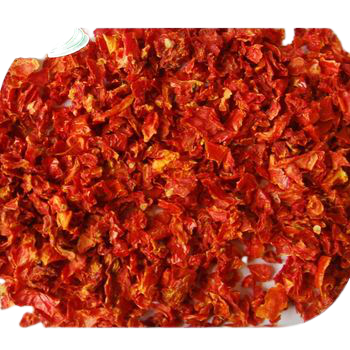
Dehydrated Tomato Flakes
Mysore, Karnataka, India
Dehydrated tomato flakes for instant foods seasonings and global ingredient buyers
Shipping Information
Exporter details revealed after verified importer registration
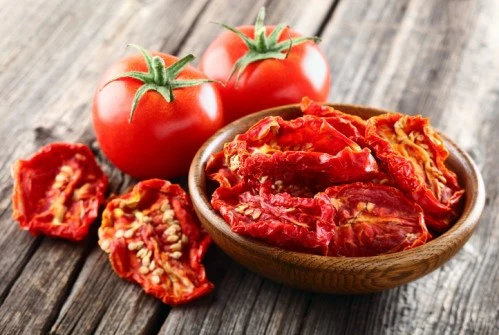
Dehydrated tomato flakes are sun-ripened tomatoes with moisture reduced to below 8% through hot air or freeze-drying, producing flat dried pieces used by food manufacturers in soup mixes, pizza toppings, pasta sauces, instant noodle seasoning, spice blends, ready-to-eat meals, and snack coatings. India's dehydrated tomato exports grew 41% year-on-year in the twelve months ending September 2024. The US takes 34% of shipments, Nepal 26%, Kenya 9%, with UAE, Japan, and UK also active. India ranks third globally in dehydrated tomato exports behind China and the United States. Gujarat is the primary processing cluster - Jamnagar, Ahmedabad, Rajkot, and Sihor house the concentration of dehydrated vegetable processing capacity that supplies B2B buyers worldwide. For food manufacturers and ingredient sourcing teams, Indian dehydrated tomato flakes offer competitive FOB pricing, seasonal supply reliability, and FSMA, EU food law, and HACCP documentation as standard.
| Attribute | Details / Value |
|---|---|
| Product Form | Flakes (irregular flat pieces); also available as diced, sliced, or powder |
| Flake Size | 3-6 mm standard; 6-12 mm large flake; custom cut on request |
| Drying Method | Hot air drying (standard); freeze-drying (premium) - specify |
| Moisture Content | Max. 8% standard grade; Max. 5-6% premium grade |
| Water Activity (Aw) | Below 0.6 (microbial stability benchmark) |
| Color | Deep red to reddish-orange; ASTA or Lovibond value on CoA |
| Rehydration Ratio | 1:3 to 1:4 (1 kg flakes yields approx. 3-4 kg rehydrated) |
| Total Ash | Max. 8% |
| Sulphur Dioxide (SO2) | With SO2 or SO2-free available - specify at order stage |
| Pesticide Residues | EU MRL compliant; test reports per shipment |
| Microbial Standards | Salmonella absent; E. coli absent; TVC and yeast/mould within Codex limits |
| Shelf Life | 12-18 months in sealed moisture-barrier packaging, cool dry storage |
| HS Code | 2002.90 (tomatoes prepared/preserved, other than by vinegar) - confirm with CHA |
The colour of dehydrated tomato flakes directly reflects lycopene retention and drying quality. Deep red means ripe source tomatoes, controlled temperatures, and good colour preservation. Pale orange or brown-tinged means unripe raw material, excessive heat during drying, or oxidation in storage. In your end product - pizza topping, soup sachet, spice blend - the colour is what the consumer sees first. Ask for the ASTA value or Lovibond measurement on the Certificate of Analysis. Photos of dehydrated product are easy to manipulate at the photography stage. Colour measurements are not.
Some Indian processors use sulphur dioxide (SO2) as a preservative to extend shelf life and hold colour during storage. EU regulation allows SO2 in dried tomatoes up to 2,000 ppm. US buyers under clean-label or organic requirements, and brands selling to sulphite-sensitive consumer segments, need SO2-free product. SO2-free flakes need tighter moisture control, better packaging, and carry shorter practical shelf life. If your label or your end buyer's spec requires "no added sulphites," say that at enquiry stage. Sulphite declarations are a regulatory labelling requirement in most markets - this is not a preference issue.
Gujarat is where most of India's dehydrated tomato processing happens. Jamnagar, Ahmedabad, Rajkot, and Sihor have the highest concentration of dedicated dehydration units in the country, built around Saurashtra and central Gujarat's tomato growing belt. Farm-to-processing proximity matters here because time between harvest and dehydration affects colour retention and lycopene content in the finished flake - a factory sitting next to the growing region processes fresher raw material than one drawing supply from three states away. Maharashtra and Andhra Pradesh supplement raw material supply into Gujarat's processing belt during peak harvest. India's 41% export growth in dehydrated tomatoes through 2023-24 reflects that capacity running at genuine commercial scale, not a startup phase.
10 kg and 25 kg multilayer kraft paper bags with inner LDPE or foil laminate liner. Vacuum-sealed for premium or freeze-dried product. Nitrogen-flushed for buyers in humid markets or with longer supply chains. Retail packs (50g, 100g, 200g) for private label. Master cartons in 5-ply corrugated.
FSSAI, APEDA, HACCP, ISO 22000:2018, Organic (NPOP/NOP), Kosher, Halal on request. Per-shipment lab reports for moisture content, water activity, colour value, pesticide residues, SO2 level, and microbial safety. Phytosanitary Certificate on each consignment.
Most exporters use HS Code 2002.90 (tomatoes prepared or preserved, other than by vinegar or acetic acid). SO2-free, additive-free product may be classified under 0712.90 (dried vegetables) by some customs authorities. The two codes can carry different import duty rates at destination. Confirm with your customs broker before the first shipment.
Hot air drying runs at 55-70°C, reduces moisture below 8%, and is the standard process for most commercial applications. Some colour and lycopene degradation happens at higher temperatures. Freeze-drying removes moisture at low temperature and pressure - colour vibrancy, lycopene content, and rehydration quality are significantly better. The per-kg cost is also significantly higher. For premium retail, baby food, or applications where the colour and nutrient profile appear on the label, freeze-dried justifies the cost. For bulk soup sachets, industrial seasoning mixes, and spice blends, hot air dried is adequate and most buyers use it.
Depends on the supplier and the spec. SO2 is used by many processors as a colour preservative and shelf extender. It is legal in dried tomatoes in the EU (up to 2,000 ppm) and the US. If your product label needs a no added sulphites claim, specify SO2-free at the time of order and ask for SO2 test results on the Certificate of Analysis from any new supplier. Do not rely on verbal confirmation alone - it is a measurable number and should be on the paperwork.
500 kg via LCL covers a meaningful quality trial - enough to test colour consistency, rehydration ratio, moisture content, and packaging integrity before committing to FCL volumes. Run the trial lot through your production line before approving the supplier. Request the CoA and lab reports alongside the physical sample, not after.
10-18 days production for standard in-stock grades. Sea freight from Mundra to US East Coast: 20-25 days. Rotterdam: 18-22 days. Freeze-dried or custom spec adds 20-30 days production. For dehydrated ingredients going into a production schedule, plan the reorder cycle around the full lead time - not around when the current stock runs low.
Connect with EXP01003 and thousands of verified Indian exporters on Navi Exports