-
-
-
-
-
-
-
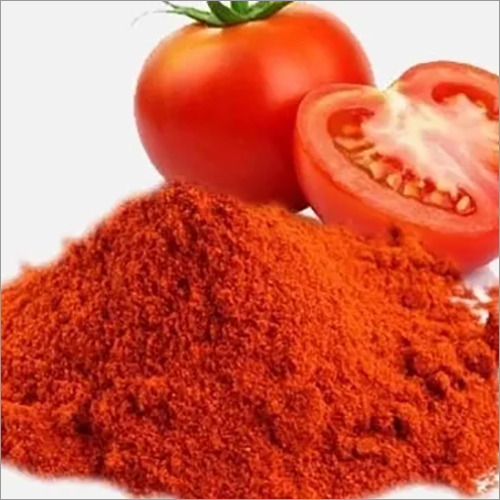
Dehydrated Tomato Powder
Amritsar, Punjab, India
Tomato powder for seasoning soups sauces and snack manufacturing in bulk export
Quantity & Pricing
| Quantity Range | Unit Type | Price Range |
|---|---|---|
| 0-100 | kg | 400 |
Shipping Information
Exporter details revealed after verified importer registration
Dehydrated tomato powder is spray-dried or drum-dried tomato processed to below 4% moisture, producing a fine red powder that dissolves directly in water, sauces, soups, and seasoning blends without rehydration wait time. The global tomato powder market was valued at over USD 1.6 billion in 2024, projected to reach USD 2.1 billion by 2031. India exports tomato powder to the United States (34% of shipments), Nepal (26%), Kenya (9%), UAE, Japan, UK, and Malaysia. India's tomato powder exports grew 41% year-on-year through September 2024. Gujarat is the primary processing hub - the same cluster that handles dehydrated tomato flakes also produces powder, with spray drying and drum drying units concentrated in Jamnagar, Ahmedabad, and Rajkot. For food manufacturers, seasoning companies, snack coating suppliers, and nutraceutical ingredient buyers, Indian dehydrated tomato powder offers competitive FOB pricing, consistent colour and lycopene specs, and the FSSAI, HACCP, and APEDA documentation that US and EU buyers need for import compliance.
| Attribute | Details / Value |
|---|---|
| Product Form | Fine free-flowing powder |
| Drying Method | Spray drying (standard); drum drying (economical); freeze drying (premium) - specify |
| Mesh Size | 60 mesh (coarse), 80 mesh (standard), 100 mesh (fine) - specify for application |
| Moisture Content | Max. 4% (spray dried); Max. 5% (drum dried) |
| Water Activity (Aw) | Below 0.4 for spray dried; below 0.5 for drum dried |
| Color | Deep red; ASTA value or Lovibond available on CoA per lot |
| Lycopene Content | Available on request - specify if sourcing for nutraceutical applications |
| Total Ash | Max. 8% |
| Acidity (as citric acid) | Min. 2.5% |
| Pesticide Residues | EU MRL compliant; test reports per shipment |
| Microbial Standards | Salmonella absent; E. coli absent; TVC within Codex limits |
| Shelf Life | 12-18 months in sealed foil-laminated packaging, cool dry storage |
| HS Code | 0712.90 (dried vegetables in powder, not further prepared); 2002.90 also used - confirm with CHA |
Tomato powder dissolves directly into liquid, seasoning mixes, and dry blends without any rehydration step. That makes it the right choice for instant soup sachets, spice blends, snack coatings, ketchup and sauce manufacturing, seasoning powders, and any application where the tomato ingredient needs to distribute evenly through a dry mix or dissolve fast in a production line. Flakes are used when visible tomato pieces matter - pizza toppings, ready meals with texture, pasta products where a chunk is expected. If your production process cannot accommodate a rehydration wait, or if the tomato needs to go into a dry blend that gets mixed, powder is the correct specification. Ordering flakes when you need powder creates problems in the formulation that are not easy to fix after the stock arrives.
Spray-dried tomato powder is the standard. Tomato paste or puree is atomised into a hot air chamber - moisture drops below 4%, the powder is fine, free-flowing, and dissolves quickly. Some colour and lycopene loss happens during the high-temperature spray process. Drum-dried powder is produced by spreading tomato slurry onto heated drums - coarser texture, slightly lower cost, adequate for most industrial seasoning applications. Freeze-dried tomato powder retains the best colour, lycopene content, and flavour intensity of the three methods, but costs significantly more. For nutraceutical ingredient buyers and premium clean-label food brands where the lycopene content appears on the label, freeze-dried is what gets specified. For industrial seasoning and snack coating volumes, spray-dried is the standard and most buyers use it.
The same Gujarat processing cluster that produces dehydrated tomato flakes - Jamnagar, Ahmedabad, Rajkot - also runs spray drying and drum drying capacity for powder. Raw material supply from Saurashtra and central Gujarat's tomato belt feeds both product forms. India grows significant tomato volumes across Gujarat, Maharashtra, and Andhra Pradesh, and the proximity of farm to processing unit matters for the quality of the paste going into the spray dryer - older, more oxidised raw material produces lower colour scores and lower lycopene retention in the finished powder. India's tomato powder export growth of 41% YoY through 2024 reflects spray drying capacity that scaled up with domestic food processing demand and is now running at export-viable volumes. For buyers in the US, UAE, and UK who are the primary markets for Indian tomato powder, Gujarat-origin product arrives with established phytosanitary and APEDA export documentation as standard.
1 kg and 5 kg retail pouches in foil-laminated multilayer bags. 25 kg multilayer kraft paper bags with inner foil liner for bulk buyers. Nitrogen-flushed vacuum-sealed packs for buyers in humid climates or with longer supply chains. Retail consumer packs for private label (50g, 100g, 200g) with custom artwork. Master cartons in 5-ply corrugated.
FSSAI, APEDA, HACCP, ISO 22000:2018, Organic (NPOP/NOP for US buyers), Kosher, Halal on request. Per-shipment lab reports for moisture content, water activity, colour value (ASTA/Lovibond), lycopene content (on request), pesticide residues, and microbial safety. Phytosanitary Certificate on each consignment.
Tomato powder dissolves directly into liquid, dry blends, and seasoning mixes without any rehydration step - used in instant soups, spice blends, snack coatings, ketchup, and sauce manufacturing. Tomato flakes are dried pieces used where visible tomato texture is needed - pizza toppings, ready meals, pasta products. If your production process requires even distribution in a dry mix or fast dissolution in a production line, powder is the correct form. Flakes do not substitute for powder in these applications.
Spray dried is the standard for most food manufacturing applications - fine, free-flowing, moisture below 4%, good dissolution speed. Drum dried is coarser and lower cost, adequate for industrial seasoning and snack coating volumes. Freeze dried retains the best colour, lycopene content, and flavour intensity but costs significantly more - specified by nutraceutical ingredient buyers and premium clean-label food brands where lycopene appears on the label. Confirm your end application before ordering; switching drying methods mid-contract affects formulation performance.
60 mesh is coarser, used where fast bulk dissolution matters more than fine texture. 80 mesh is the standard for most seasoning blends, instant soups, and sauce manufacturing. 100 mesh is fine - used for snack coatings, spice blends where smooth texture is required, and applications where the powder needs to stay suspended in liquid. Specify the mesh size on your purchase order; the default varies by supplier and a mismatch in particle size creates production line problems that are not obvious until you are mid-run.
Additive-free dehydrated tomato powder is most cleanly classified under 0712.90 (dried vegetables in powder form, not further prepared). Many Indian exporters also use 2002.90 for spray-dried tomato powder, particularly where the product contains added salt or anti-caking agents. The two codes carry different duty rates in several importing countries. Confirm the correct code with your customs broker before the first shipment - this is easier to resolve before the container ships than after.
10-18 days production for standard in-stock spray-dried grades. Sea freight from Mundra or Nhava Sheva to US East Coast runs 20-25 days; to Rotterdam around 18-22 days. Freeze-dried or custom mesh specification adds 25-35 days production before shipping. For seasoning and food manufacturing buyers working against production schedules, build the full lead time into your reorder point - not just the transit days.
Connect with EXP01003 and thousands of verified Indian exporters on Navi Exports