-
-
-
-
-
-
-
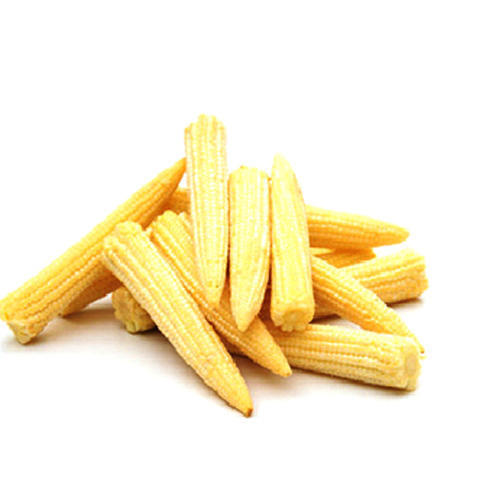
Fresh Baby Corn Exporter Premium Quality Europe Bulk
Bengaluru, Karnataka, India
Fresh baby corn exporter premium quality Europe bulk supply.
Shipping Information
Exporter details revealed after verified importer registration
Baby corn isn't a separate variety of maize, it's regular corn harvested within a day or two of silk emergence, before pollination, while the cob is still small and tender enough to eat whole. That timing is the whole product. Harvest too late and it toughens into feed corn instead of a delicate vegetable. This gets grown and hand-picked around Bengaluru's surrounding farmland and moved fast toward pre-cooling and packing, since fresh baby corn heading to Europe has a genuinely short window before quality starts dropping, not the weeks of shelf life a root vegetable or a spice would give you.
| Attribute | Details / Value | Compliance / Standard |
|---|---|---|
| Harvest Stage | Picked within 1-2 days of silk emergence, pre-pollination | Confirms tenderness and size |
| Cob Length | 4 to 10cm, graded for uniformity | Buyer-specified size range available |
| Color | Pale yellow to cream, husk removed or intact per order | Visual grading per batch |
| Pre-Cooling | Forced-air or hydro-cooled within hours of harvest | Drops field heat before cold storage |
| Storage Temperature | 0 to 4°C, maintained through transit | Unbroken cold chain required |
| Shelf Life | 7 to 10 days under proper refrigeration from harvest | Shorter than most fresh vegetable categories |
| Packaging | Perforated poly bags in ventilated cartons, 5kg to 10kg | Retail punnets available for private label |
| HS Code | 0709.99 (International) / 07099990 (India ITC-HS) | WCO Harmonized System, "other vegetables, fresh or chilled" |
Baby corn is time-sensitive in a way most export vegetables aren't. It has to be picked at exactly the right stage, cooled fast to stop the cob from continuing to develop after harvest, and moved into cold chain before quality starts slipping. Bengaluru's surrounding farmland grows it at meaningful scale, and the city's cargo infrastructure, including direct air freight capacity out of Kempegowda International Airport, means a shorter gap between field and aircraft than trucking the crop from a more remote growing belt to a distant port would allow. For a product with a 7 to 10 day clock running from the moment it's picked, that shorter domestic leg is the difference between arriving in Europe with real shelf life left and arriving with almost none.
European fresh produce importers and wholesale distributors are the primary buyer, supplying supermarket chains and specialty grocers who stock it as a ready-to-cook stir-fry vegetable. Foodservice distributors supplying Asian and pan-Asian restaurant chains buy in steadier volume, since baby corn is a staple ingredient there rather than an occasional item. A smaller but consistent buyer group is private-label packers who repack into their own branded punnets for retail, and they tend to care more about size uniformity and husk presentation than the bulk foodservice buyers do.
No. It's ordinary corn harvested very early, before the kernels develop, while the cob is still small and tender. The timing of the harvest is what makes it baby corn, not a separate cultivar bred specifically for this purpose.
Fresh baby corn has a shelf life of roughly 7 to 10 days under refrigeration from the moment it's harvested. Sea freight to Europe takes longer than that on its own, so air freight is the only way to deliver it with meaningful shelf life still left for the buyer's own distribution.
This page covers fresh baby corn specifically, sold under a different HS code and logistics model than frozen or canned product. If your business needs a longer shelf-life format, that's a separate inquiry since the processing, packaging, and shipping method are all different.
Not legally required by the EU itself, but most major European supermarket chains require it contractually from their suppliers as a private standard. If you're supplying a retailer directly rather than a foodservice distributor, confirm their specific certification requirement before ordering.
Mainly a broken cold chain or a delay between harvest and pre-cooling. Once field heat isn't removed quickly, the cob continues to mature and lose tenderness even after picking, which is why same-day pre-cooling and unbroken refrigeration matter more for this product than for most fresh vegetables.
Connect with EXP01002 and thousands of verified Indian exporters on Navi Exports