-
-
-
-
-
-
-
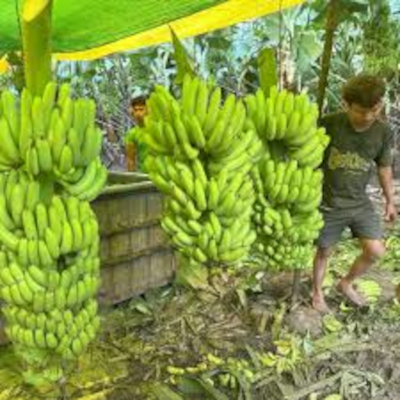
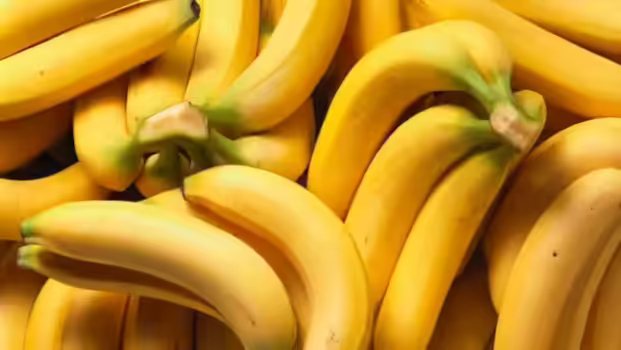
Fresh Banana Exporter 30 To 45 Days Shelf Life
Kolkata, West Bengal, India
Fresh banana exporter 30 to 45 days shelf life delivering long-transport-ready bananas for global distribution.
Shipping Information
Exporter details revealed after verified importer registration
Banana keeps ripening after it's picked, which is exactly what makes long-distance export tricky and exactly what this process is built to manage. G9 Grand Naine, the variety almost all Indian banana export runs on, gets harvested green, rapidly pre-cooled to around 13.5°C, and packed in vacuum-sealed, modified-atmosphere liners that put the fruit into something close to dormancy for the voyage. Done right, that combination holds the fruit unripened for 30 to 45 days, long enough for sea freight to reach the Middle East or further, arriving green and ripening properly once it's released from cold storage at the destination. Jalgaon, which holds its own GI tag for banana, is where a large share of this actually gets grown and packed.
| Attribute | Details / Value | Compliance / Standard |
|---|---|---|
| Variety | Grand Naine (G9), export standard | GI-tagged Jalgaon Banana available |
| Harvest Stage | Green, pre-ripening, harvested at target maturity | Confirmed via finger diameter and days-from-flowering |
| Pre-Cooling | Rapid cooling to approximately 13.5°C post-harvest | Stops premature ripening onset |
| Packaging | 5-ply telescopic export cartons, vacuum-sealed modified-atmosphere poly-liners, foam dividers | Prevents friction bruising and slows ripening |
| Shelf Life (Unripened) | 30 to 45 days maintained cold chain | Ripens normally once released from cold storage |
| Grade | A Grade / Extra Class, uniform finger size and curvature | Buyer-specified grade available |
| Bunch/Hand Weight | Cut and packed as hands, weight confirmed per order | Custom carton weight available |
| HS Code | 0803.90 (International) / 08039010 (India ITC-HS) | WCO Harmonized System |
Jalgaon's banana didn't get a GI tag by accident. The district has grown banana at serious scale for generations, and that scale built up the packing infrastructure, pre-cooling capacity, and grower expertise that this export process actually depends on. The failure point most inexperienced suppliers hit isn't the variety or the packaging materials, it's the gap between harvest and pre-cooling. A truck full of banana sitting in the open under Indian sun for even a few hours before reaching a cooling facility starts the ripening clock in a way that's hard to fully reverse, no matter how good the vacuum liner is afterward. Jalgaon's concentration of growers and packhouses close together keeps that gap short, which is the real reason the shelf-life numbers hold up reliably here rather than being an occasional best-case result.
Middle Eastern wholesale importers, particularly in the UAE, Saudi Arabia, Oman, Bahrain, and Qatar, are the primary and most established buyer group, drawn by both geographic proximity and long-standing trade relationships with Indian exporters. European and Russian buyers are a newer but growing segment, made viable specifically because the extended shelf life supports sea freight over those longer distances instead of requiring the higher cost of air freight. Ripening facility operators in the destination country are typically the direct buyer rather than retailers themselves, since bananas arrive green and need a controlled ripening process before they're shelf-ready.
Through a combination of rapid pre-cooling to around 13.5°C right after harvest and vacuum-sealed, modified-atmosphere packaging that slows the fruit's natural ripening process. This puts the banana into something close to dormancy for the duration of transit, and it resumes ripening normally once removed from cold storage at the destination.
It arrives green, by design. Export banana ships unripened specifically to survive the transit window, and the buyer or a dedicated ripening facility at the destination handles the controlled ripening process before the fruit goes to retail.
Banana is a climacteric fruit, meaning it continues ripening after harvest, and that process accelerates in heat. If the fruit sits in warm conditions for hours before reaching a cooling facility, the ripening clock effectively starts early, and even the best modified-atmosphere packaging afterward can't fully undo that head start.
G9 Grand Naine has uniform size, strong transit resistance, and a shelf-life profile suited to long-distance shipping, which is why it dominates export volume. Other varieties like Robusta or Nendran are grown widely in India too but are generally sold domestically or used for processing rather than long-haul fresh export.
Yes, when the cold chain and modified-atmosphere packaging are managed correctly, sea freight is increasingly the standard method rather than the exception, since it's meaningfully cheaper than air freight for the same volume. This shift toward sea freight is a big part of why the industry has invested in extending shelf life through better pre-cooling and packaging technology.
Connect with EXP01002 and thousands of verified Indian exporters on Navi Exports