-
-
-
-
-
-
-
Handmade Silver Jewelry Exporter India Artisan Jewelry Supplier Wholesale
Lucknow, Uttar Pradesh, India
Handmade silver jewelry exporter in India offering artisan and handcrafted collections. Wholesale supplier for boutique stores and global buyers.
Shipping Information
Exporter details revealed after verified importer registration
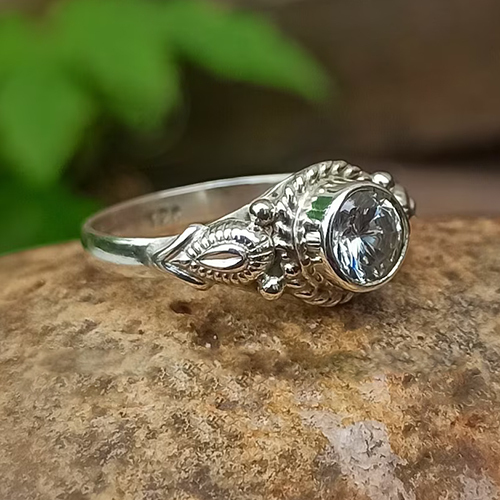
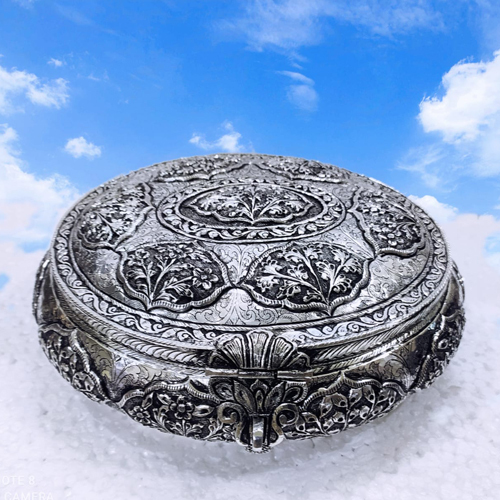
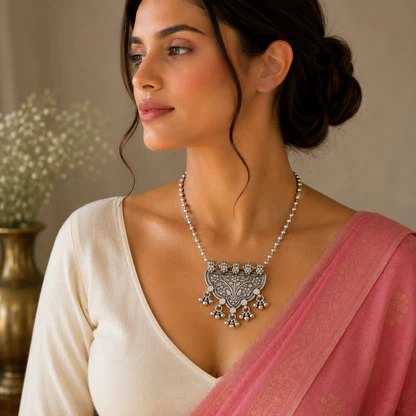
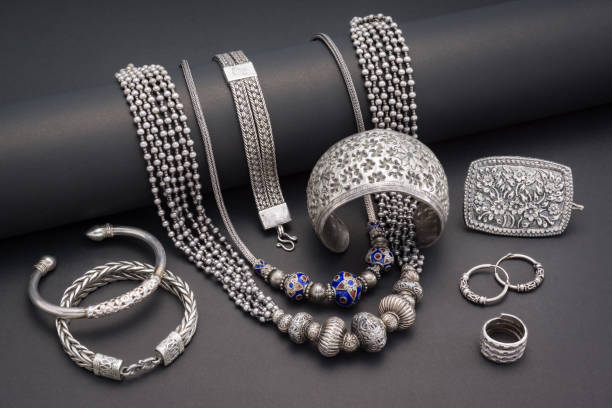
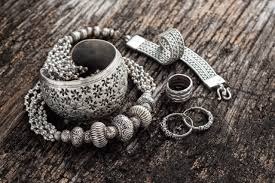
This is jewelry shaped by hand, not cast in a mold and finished on an assembly line. Wire-wrapped filigree, hammered textures, hand-set stones, oxidized and antiqued finishes done by an artisan rather than a plating tank. Two craft traditions dominate this category out of India: Cuttack's silver filigree work, a 500-year-old technique that earned a GI tag in 2024, and Rajasthan's oxidized tribal-style silver, worked by hand into the chunky, blackened designs that have become a staple of bohemian and ethnic jewelry markets abroad. Buying handmade means accepting small variations piece to piece. That's not a defect, it's the point.
| Attribute | Details / Value | Compliance / Standard |
|---|---|---|
| Metal Purity | 925 sterling silver, or 90%+ silver alloy for traditional filigree | BIS Hallmark, HUID marked |
| Craft Techniques | Hand filigree, hammered texture, oxidized/antiqued finish, hand stone-setting | Cuttack Tarakasi (GI-tagged), Rajasthan tribal silver work |
| Design Range | Filigree earrings and pendants, oxidized statement pieces, tribal-style cuffs and anklets | Catalog and custom design available |
| Piece Variation | Natural variation in weight and finish between pieces of the same design | Expected characteristic of handwork, not a defect |
| Production Time | Hand fabrication takes longer than casting, plan for longer lead times on large orders | Confirmed per order based on artisan availability |
| Packaging | Anti-tarnish pouches, artisan-story cards available for retail packaging | Custom packaging at MOQ |
| HS Code | 7113.11 (International) / 71131110, 71131120, 71131130 (India ITC-HS) | WCO Harmonized System |
Tarakasi, Cuttack's silver filigree, works differently from most jewelry manufacturing. Silver is melted, drawn into thread-thin wire by hand, and then twisted and coiled into patterns before it's soldered into shape. Artisans there, known as Roupyakaras, have practiced this for over five centuries, and the craft got formal GI recognition in 2024, which protects the name and ties it back to that specific artisan community. Rajasthan's tradition runs differently. Silver is oxidized to bring out contrast in hammered or engraved surfaces, producing the darker, tribal-influenced look common in anklets, cuffs, and statement earrings. Both traditions rely on artisans who trained under a master for years before working independently, which is part of why handmade pieces cost more than cast equivalents and also why buyers pay for them anyway.
Because an artisan is spending hours shaping each piece by hand rather than pouring it into a mold that produces identical units in minutes. That labor time is the cost difference, not a markup for the sake of it.
No, and that's expected with handwork. Weight, finish, and small design details will vary slightly piece to piece. If you need exact uniformity across a large order, cast silver jewelry is a better fit than handmade.
It's a 500-year-old silver wire craft from Cuttack, Odisha, where silver is drawn into fine wire and twisted into intricate patterns by hand. The GI tag, granted in 2024, legally ties the name to that specific artisan community, similar to how Champagne is tied to a region in France.
Longer than a cast silver order of the same size, since hand fabrication doesn't scale by simply running more machines. Lead time depends on the technique and how many artisans are available for that design, so we confirm it at order time rather than quoting a fixed number upfront.
Standard 925 designs carry the BIS Hallmark with HUID. Some traditional filigree work uses a silver alloy above 90% purity rather than the standard 925 grade, which is worth checking per design rather than assuming across the whole catalog.
Connect with EXP01009 and thousands of verified Indian exporters on Navi Exports