-
-
-
-
-
-
-
HR & Recruitment Software
Pune, Maharashtra, India
HR & Recruitment Software provider from Pune India delivering workforce automation and employee management platforms.
Shipping Information
Exporter details revealed after verified importer registration
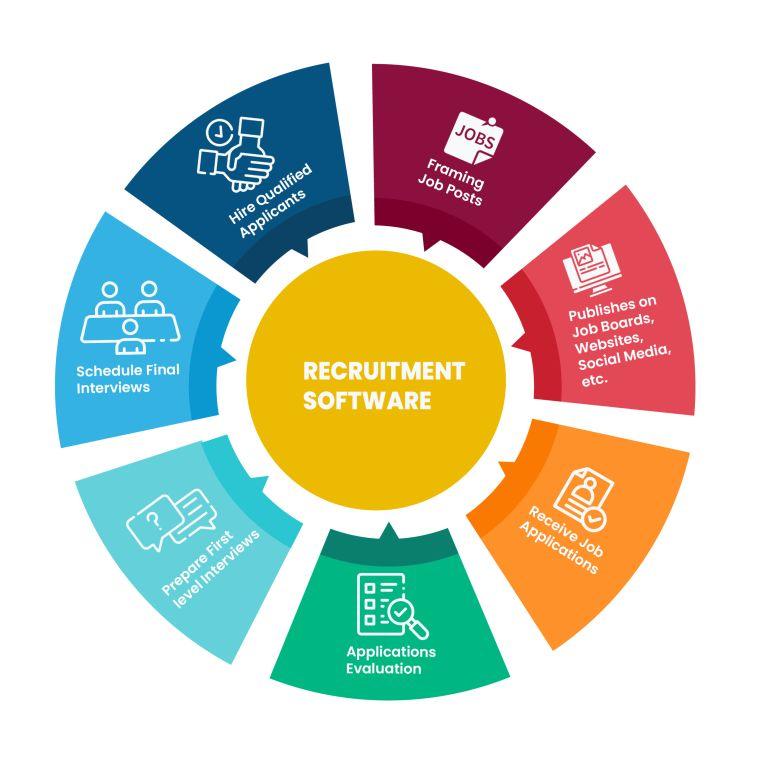
Custom HR and recruitment software covers purpose-built applicant tracking systems (ATS), HR management systems (HRMS), payroll engines, onboarding platforms, and workforce analytics tools developed to match a specific organization's hiring workflows, approval hierarchies, compliance requirements, and integration environment. The global recruitment software market was USD 3.30 billion in 2025, growing to USD 6.20 billion by 2032 at 9.4% CAGR. India's HR technology market reached USD 1,208.26 million in 2025, projected at USD 2,329.11 million by 2034. Recruitment accounts for 25% of India's HR tech spend - the largest single application category. Indian development teams build custom HR and recruitment systems for US, UK, Australian, and Canadian staffing agencies, mid-market enterprises, IT and BPO companies, manufacturers, and healthcare networks at USD 25-45 per developer hour against USD 150-200 for equivalent US or UK development.
| Module / Feature | Details |
|---|---|
| Applicant Tracking System (ATS) | Job posting distribution, resume parsing, candidate pipeline, interview scheduling, offer management, rejection workflows |
| HRMS Core | Employee master data, org chart, document management, role-based access, full audit trail |
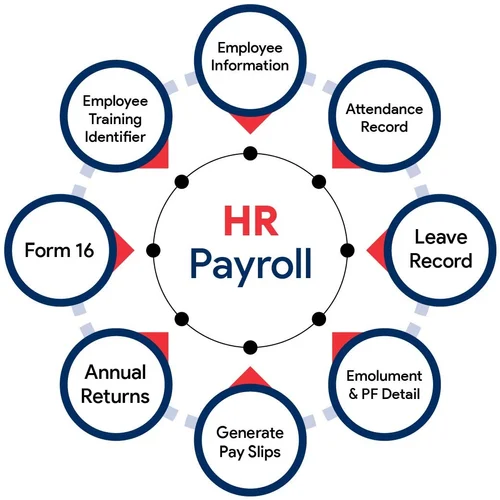
| Payroll Engine | Gross-to-net calculation, statutory deductions (PF, ESI, PT, TDS, gratuity, LWF), payslip generation, bank transfer files |
| Leave and Attendance | Leave policy configuration, accruals, approval workflows, biometric/RFID device integration, shift scheduling |
| Onboarding Workflow | Digital offer acceptance, document collection, background verification triggers, IT asset assignment, induction task tracking |
| Performance Management | OKR/KRA goal setting, 360-degree feedback, appraisal cycles, rating calibration, promotion workflows |
| Employee Self-Service Portal | Payslip access, leave applications, expense claims, document downloads, manager approvals |
| AI Recruitment Features | Resume screening and ranking, JD-to-candidate matching, candidate chatbot, interview scheduling automation |
| Reporting and Analytics | Time-to-hire, cost-per-hire, attrition, headcount forecasting, diversity metrics, custom report builder |
| Integrations | Job boards (LinkedIn, Naukri, Indeed, Foundit), HRIS/ERP (SAP, Oracle, Workday), background check APIs, video interview platforms |
| Mobile App | iOS/Android for employee self-service, leave approvals, attendance marking, recruitment pipeline |
| Compliance Module | Statutory filing support, labour law compliance tracking, audit-ready reports, document retention |
Off-the-shelf HRMS tools - Darwinbox, Keka, Zoho People, BambooHR, Workday - handle standard HR workflows well. For most organizations, they are the right starting point. Custom development makes sense when the business's processes are specific enough that standard software requires workarounds that cost more in staff time than a build would. In India, payroll is the most consistent trigger. PF, ESI, Professional Tax, TDS, gratuity, and Labour Welfare Fund rules vary by state, establishment type, and employee category in ways most off-the-shelf payroll engines handle only partially. A manufacturing company running contract labour across five states, or a BPO with different shift allowances by location, will spend more time correcting generic payroll output than a custom engine costs to build. Outside payroll, the common triggers are custom approval hierarchies that cannot be configured without expensive vendor customization, biometric attendance hardware with no standard connectors, high-volume IT/BPO recruitment needing custom pipeline stages and bulk communication tools, and integration with proprietary ERP systems.
A staffing or recruitment agency manages candidate pools across dozens of clients, each with different job requirements, rate cards, and compliance needs. Internal HR teams track one organization's employees. These are different operational problems. Most enterprise ATS products are built for internal HR. When agencies use them to manage client mandates, consultant availability, placement tracking, and multi-client databases, they typically end up running heavy spreadsheet workarounds alongside the tool - the tool handles job posting, the spreadsheet handles everything else. What a staffing agency actually needs: a client portal where clients submit requisitions and shortlist candidates, a consultant database tracking availability and rates, placement and billing management, multi-client data separation with controlled access, and accounting integration for invoicing. These are not features in most enterprise ATS products. If your ATS evaluation keeps turning up features you need that require customization or are simply absent, that pattern is the answer.
Indian developers building HR and recruitment systems bill USD 25-45 per hour. US and UK equivalents run USD 150-200 per hour. A mid-tier HRMS covering core HR, leave management, attendance, payroll, and employee self-service typically runs USD 40,000-80,000 with an Indian team. The same scope with a US firm runs USD 180,000-320,000. India's own HR technology market is USD 1.2 billion - the developers building for international clients are also building for a domestic market with real complexity. Indian payroll compliance is among the most complex globally, and teams who have built production payroll systems for Indian enterprises regularly bring that experience to international builds. That is different from teams who have built HR demo modules and extrapolate to payroll.
Ask to see a live HRMS or ATS they built handling similar complexity to yours - then speak to the HR manager who uses it daily, not the IT team who commissioned it. HR software has a specific user base with specific daily frustrations that a technical demo will not surface. Ask how they handle statutory compliance updates after the system goes live. Payroll rules change when government notifications update PF or ESI rates, and a system that requires a development sprint for every statutory change is not production-ready. Confirm data security arrangements explicitly: HR software holds salary data, bank account details, performance records, and disciplinary history. The contract needs to address encryption, role-based access, audit logging, and what happens to employee data if the relationship ends.
Fixed-price for well-defined module builds with stable requirements. Time-and-material for complex integrations or builds where requirements develop during discovery. Dedicated development team for ongoing product development. Monthly retainer for post-launch maintenance, statutory compliance updates, and feature additions.
Backend: Node.js, Python (Django/FastAPI), Laravel, .NET. Frontend: React, Angular, Vue.js. Mobile: React Native, Flutter. Database: PostgreSQL, MySQL. Cloud: AWS, Azure. Integrations: REST APIs, SFTP for payroll bank files, biometric SDK integration (ZKTeco, Hikvision, Realtime). Stack recommendation depends on your existing infrastructure and what your team can maintain after handoff.
Off-the-shelf tools are the right answer for most organizations. Custom makes sense when your workflows are specific enough that standard software requires workarounds costing more in staff time than a build would. In India, payroll is the most consistent trigger - PF, ESI, PT, TDS, gratuity, and LWF rules vary by state and establishment type in ways most off-the-shelf engines handle only partially. Other triggers: custom approval hierarchies that cannot be configured without vendor support, biometric hardware with no standard connectors, high-volume recruitment workflows needing custom pipeline stages, and proprietary ERP integrations. Estimate how much time your HR team spends correcting software output or maintaining parallel spreadsheets. That number is the real comparison against a build budget.
Staffing agencies manage candidates across multiple clients with different job requirements, rate cards, and compliance needs. Enterprise ATS tools are built for internal HR teams tracking one organization's hiring. The operational problem is different. Agencies using enterprise ATS for multi-client management typically end up running spreadsheet workarounds alongside the tool. What agencies actually need: client portals for requisition submission and candidate shortlisting, consultant databases tracking availability and rates, placement and billing management, multi-client data separation with access controls, and accounting integration for invoicing. If your ATS evaluation keeps turning up features that need customization or are absent, that pattern tells you more than the vendor's feature comparison chart.
Indian payroll compliance is among the most complex globally. PF, ESI, Professional Tax, TDS, gratuity, and Labour Welfare Fund rules vary by state, establishment type, employee category, and wage threshold - and they change when government notifications update rates or coverage. A production payroll engine needs built-in compliance update mechanisms, not a development sprint every time a statutory rate changes. Ask specifically how the development team handles statutory updates post-launch. This is the question that separates teams who have built live payroll systems from teams who have built payroll modules that have never processed an actual salary run.
HR software holds some of the most sensitive organizational data: salary figures, bank account details, performance records, disciplinary history, and medical information for leave and insurance claims. The contract needs to address encryption at rest and in transit, role-based access limiting who can see what, audit logs of all access and changes, and data residency requirements for EU deployments (GDPR). Confirm what happens to employee data if the vendor relationship ends - this is not a standard clause in many development contracts and needs to be added. For EU-market deployments, GDPR compliance in the system architecture is non-negotiable and needs to be confirmed explicitly before development begins.
A single-module build runs USD 10,000-25,000 in 6-10 weeks. A mid-tier HRMS covering core HR, leave management, attendance, payroll, and an employee self-service portal runs USD 40,000-100,000 over 16-28 weeks. A full-suite platform including HRMS, ATS, performance management, analytics, and mobile app runs USD 100,000-300,000 or more over 6-12 months. Indian developer rates at USD 25-45 per hour put these ranges 60-80% below equivalent US or UK agency pricing for the same scope. Data migration from existing HR systems and biometric hardware integration are separate cost items that need explicit scoping - both are consistently underestimated in initial project budgets.
Connect with EXP01023 and thousands of verified Indian exporters on Navi Exports