-
-
-
-
-
-
-
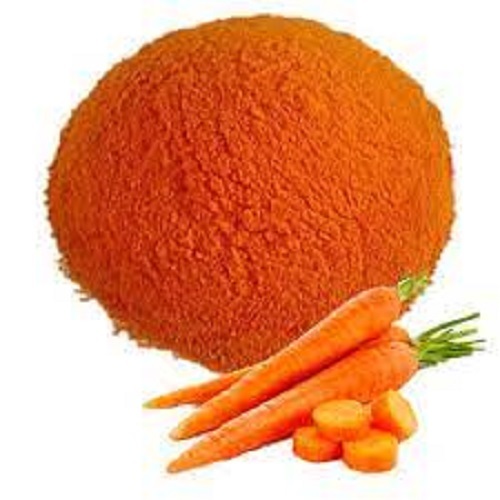
Organic Carrot Powder
Ahmedabad, Gujarat, India
Organic carrot powder for premium ingredient supply and health food applications
Quantity & Pricing
| Quantity Range | Unit Type | Price Range |
|---|---|---|
| 0-100 | kg | 280 |
Shipping Information
Exporter details revealed after verified importer registration
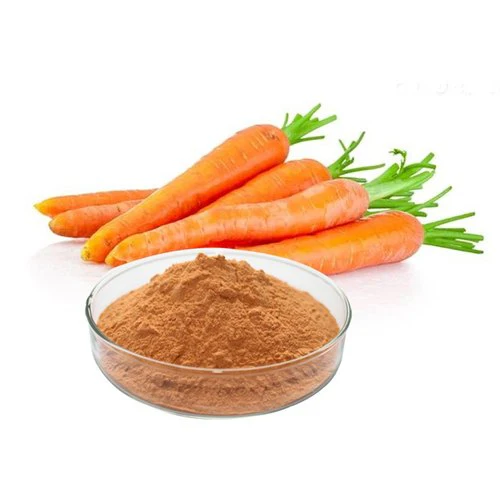
Organic carrot powder is dehydrated Daucus carota from certified organic farms, processed into a fine orange powder used as a natural food colourant, nutritional ingredient, and functional food additive. The global carrot powder market was valued at USD 2,045.81 million in 2025 and is projected to reach USD 4,843.18 million by 2035 at 9% CAGR. The United States takes 52% of global carrot powder imports. India is the second largest exporter globally, behind China. For buyers sourcing organic specifically, India is the more credible origin - NPOP and USDA NOP certification from Indian processors carries stronger market acceptance in US and EU retail than Chinese organic equivalents, where certification integrity questions have persisted among Western buyers for years. Applications cover baby food, bakery, soups, health drink blends, nutraceutical capsules, natural food colouring, cosmetic formulations, and pet food. Rajasthan and Haryana grow the primary carrot varieties used in Indian export-grade powder, with Pusa Kesar the preferred variety for deep orange colour and high beta-carotene content.
| Attribute | Details / Value |
|---|---|
| Botanical Name | Daucus carota |
| Form | Fine free-flowing powder |
| Organic Certification | NPOP (India); USDA NOP (US buyers); EU Organic 2018/848 on request |
| Drying Method | Hot air (standard); spray dried (fine, free-flowing); freeze dried (premium, highest beta-carotene) - specify |
| Colour | Deep orange; natural, no added colourants |
| Beta-Carotene Content | 100-400 mg/100g depending on variety and drying method; lot-specific CoA required |
| Mesh Size | 80 mesh standard; 100 mesh fine grind on request |
| Moisture Content | Max. 6% (hot air); Max. 3% (spray/freeze dried) |
| Water Activity (Aw) | Below 0.5 |
| Total Ash | Max. 8% |
| Pesticide Residues | Organic certified - below EU/US MRL limits; third-party test reports per lot |
| Microbial Standards | Salmonella absent; E. coli absent; TVC within Codex limits |
| Shelf Life | 18-24 months in sealed nitrogen-flushed foil packaging, cool dry storage |
| HS Code | 0712.90 (dried vegetables in powder, not further prepared) - confirm with CHA |
Carrot powder sells into two buyer segments with very different priorities. Food manufacturers and bakery ingredient buyers are buying natural orange colour and mild flavour - beta-carotene produces the colour, but they are not measuring it by the milligram. Nutraceutical manufacturers, supplement brands, and functional food companies are buying beta-carotene as an active ingredient with a number that has to appear on a certificate and justify a label claim. A hot air dried carrot powder at 100-150 mg beta-carotene per 100g works fine for a bakery muffin or a soup. A freeze-dried powder at 350-400 mg/100g is what goes into a supplement capsule where the label says "rich in beta-carotene." These are not interchangeable specs. Ask which drying method the supplier uses and get the beta-carotene value on the lot-specific Certificate of Analysis - the product data sheet figure is often a best-case average, not the actual lot measurement.
Beta-carotene is heat-sensitive. Hot air drying at 55-70°C degrades a portion during processing - the colour still comes through, the nutritional loss is real. Spray drying reduces moisture below 3% and produces fine, free-flowing powder with good dissolution but involves comparable heat exposure. Freeze drying removes moisture under vacuum at low temperature - beta-carotene retention is significantly better, colour is more vivid, and the powder rehydrates cleanly. Cost is also higher, sometimes substantially. For supplement and functional food buyers where the beta-carotene number is on the label, freeze-dried is the right grade. For bakery, soup colouring, and natural food manufacturing where exact beta-carotene content is not critical, hot air or spray dried is standard.
China accounts for 66% of global carrot powder exports. For conventional carrot powder, China is the default origin on price. For certified organic specifically, the picture is different. US and EU buyers sourcing organic for natural retail, clean-label baby food, and supplement brands have had persistent concerns about organic certification integrity from Chinese processors - concerns that have shown up in import rejection data and retailer audits. Indian NPOP certification holds EU organic equivalency recognition. USDA NOP dual certification is held by established Indian exporters. The certification chain from farm to finished powder is auditable. That traceability is what gets organic ingredients through import verification in the US and through retailer supplier audits in the EU - and it is what buyers who have had problems with Chinese organic certification are paying for when they come to India.
Rajasthan and Haryana grow India's primary commercial carrot crop. Pusa Kesar - the preferred variety for export-grade powder - produces deep orange roots with higher beta-carotene content than most other commercial varieties. Organic cultivation under NPOP standards in these states is not new; multi-year certified supply chains mean processors are drawing from established organic farms, not first-year conversion land. Processing units in Rajasthan and nearby Gujarat handle the full chain from certified organic raw carrot through washing, peeling, slicing, dehydrating, and milling under HACCP and ISO 22000 systems. Each stage is documentable, which matters when a US supplement manufacturer's QA team asks for the supply chain audit trail.
1 kg and 5 kg retail pouches in nitrogen-flushed foil-laminated multilayer bags. 25 kg multilayer kraft bags with inner foil liner for bulk. Vacuum-sealed packs for freeze-dried premium grade. Retail consumer packs (50g, 100g, 200g) for private label. Opaque packaging is standard - beta-carotene degrades under light exposure. Master cartons in 5-ply corrugated.
NPOP organic, USDA NOP, EU Organic (EU) 2018/848 on request, FSSAI, APEDA, HACCP, ISO 22000:2018, Kosher, Halal on request. Per-lot CoA with beta-carotene content, moisture, water activity, pesticide residues, and microbial safety. Transaction certificates per lot for organic traceability. Phytosanitary Certificate on each consignment.
Beta-carotene content runs 100-400 mg per 100g depending on carrot variety, growing conditions, and drying method. Hot air dried powder typically falls in the 100-200 mg/100g range. Freeze-dried retains significantly more, often 300-400 mg/100g. For nutraceutical and supplement applications where beta-carotene appears on the label, always request the lot-specific Certificate of Analysis with the actual measured value - not just the product data sheet figure, which often represents a best-case average rather than the specific lot being shipped.
Indian organic carrot powder is certified under NPOP (National Programme for Organic Production), which holds EU organic equivalency recognition - NPOP-certified product can enter the EU under organic labelling. For the US market, USDA NOP certification is required; established Indian exporters hold both NPOP and NOP simultaneously. A transaction certificate per shipment is required for organic traceability in both markets. Confirm which certification applies before ordering - NPOP alone is not accepted everywhere.
Yes. In the EU, organic carrot powder is classified as a food ingredient rather than a food additive, so it does not require an E-number declaration on the label - a practical advantage over synthetic beta-carotene (E160a). In the US it is classified as a natural colour ingredient. It produces orange colour in bakery products, pasta, snacks, sauces, beverages, and baby food. Colour intensity varies with beta-carotene content and application pH, so run a colour stability trial in your specific formulation before committing to volume.
Hot air drying runs at 55-70°C and is adequate for food colouring, bakery, soup, and sauce applications where beta-carotene content is not precisely specified. Freeze drying removes moisture at low temperature under vacuum - beta-carotene retention is significantly better and colour is more vivid. For supplement manufacturers and functional food brands where the beta-carotene value appears on the label or formulation spec, freeze-dried is the correct grade. For general food manufacturing applications, hot air or spray dried works and costs substantially less per kg.
15-20 days production for standard in-stock hot air dried organic grade. Freeze-dried or specific lot with fresh CoA adds 25-35 days. Sea freight from Nhava Sheva to US East Coast: 22-28 days. Rotterdam: 20-24 days. For supplement manufacturers working against production schedules with lot-specific CoA requirements, organic certification documentation takes slightly longer to process than conventional - build in the full lead time plus a buffer.
Connect with EXP01003 and thousands of verified Indian exporters on Navi Exports