-
-
-
-
-
-
-
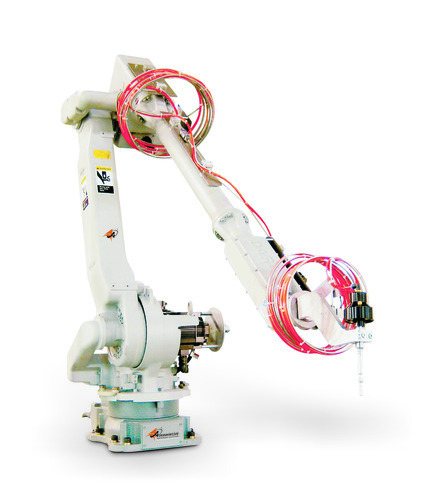
Robotic Manufacturing Equipment
Noida, Uttar Pradesh, India
Robotic Manufacturing Equipment supplier from Noida India delivering intelligent robotics solutions with advanced industrial automation capabilities.
Shipping Information
Exporter details revealed after verified importer registration
This covers complete robotic manufacturing cells, welding stations, assembly workstations, and CNC machine-tending systems built and integrated as a working unit rather than sold as a standalone robot arm a buyer has to engineer into their own line. The distinction matters: a cobot or mobile robot is a component. A manufacturing cell is a finished piece of production equipment, the robot, the fixturing, the safety guarding, the control system, and the programming all delivered together and tested before it ships. Indian system integrators like TAL Manufacturing Solutions, part of the Tata Group, and Wipro PARI have built this specific capability, taking robotic hardware and turning it into a working cell rather than just supplying the arm.
| Attribute | Details / Value | Compliance / Standard |
|---|---|---|
| Cell Types | Robotic welding cells, assembly stations, CNC machine-tending systems, pick-and-place cells | Custom cell design per buyer's product |
| Robot Integration | Multi-axis arm mounted with application-specific end-of-arm tooling | Robot brand per buyer specification or integrator recommendation |
| Safety Systems | Light curtains, safety fencing, interlocked guarding | ISO 10218 industrial robot safety standard |
| Control Integration | PLC-based cell control, HMI touchscreen operator interface | Integrated with existing line control where applicable |
| Fixturing | Custom-designed jigs and fixtures matched to the specific part being processed | Built to buyer's part drawings/CAD files |
| Testing Before Shipment | Full cycle testing with sample parts before the cell leaves the factory | Buyer sign-off available via video or in-person witness test |
| Installation Support | On-site commissioning standard given the complexity of a full cell | Remote support for post-installation troubleshooting |
| HS Code | 8479.50 (International, industrial robots and robotic systems) | WCO Harmonized System, Chapter 84 |
Building a working manufacturing cell, rather than just selling a robot arm, requires mechanical design, controls engineering, and application know-how sitting in one place, and this is where Indian system integrators have built real credibility over the past decade. TAL Manufacturing Solutions carries Tata Group's weight and manufacturing experience behind it, having worked with automotive and general engineering clients on production-line automation for years. Companies like DiFACTO Robotics in Bangalore and Wipro PARI in Pune have built specifically around large-scale industrial automation project delivery, not just component supply. For a buyer, this integrator-led model means one point of accountability for the whole cell rather than sourcing a robot from one supplier and hiring a separate engineering firm to build everything around it, a coordination cost that adds real time and risk to a project.
Automotive component manufacturers are the most established buyer group, since welding and assembly automation in this sector has decades of precedent in India and integrators here have deep experience with the tolerances and cycle times that industry demands. General engineering and metal fabrication companies buy CNC tending cells specifically to free up skilled machinists from repetitive load-unload work, redirecting them to higher-value tasks. Electronics and consumer goods manufacturers are a growing buyer segment for assembly and pick-and-place cells, particularly as labor costs rise and consistency requirements tighten for export-grade product quality.
A robot arm is a component you still need to engineer into a working station yourself, sourcing fixturing, safety guarding, and controls separately. A manufacturing cell is delivered as a complete, tested unit, the robot, tooling, safety systems, and controls all integrated and verified together before it reaches your facility.
Yes, and this should be standard practice rather than an optional extra. Sending sample parts for a witness test, either in person or via video, before the cell leaves the factory is the best way to confirm cycle time and quality before committing to shipment and installation.
A complete manufacturing cell involves mechanical alignment, safety interlock verification, and integration with your existing production line, all things that genuinely need a technician physically present to get right. This is different from a standalone cobot, which is simpler enough that remote guidance often suffices.
This should be addressed explicitly in the service agreement before purchase, covering spare parts lead time, remote troubleshooting response time, and when on-site support gets triggered. A cell going down stops your production line, so this isn't a detail to leave vague in the contract.
Established integrators like TAL Manufacturing Solutions, part of the Tata Group, have years of experience specifically in automotive component welding and assembly automation, so this is a genuinely proven capability rather than a new offering. Ask for reference deployments in your specific industry to confirm fit before committing.
Connect with EXP01003 and thousands of verified Indian exporters on Navi Exports