
-
-
-
-
-
-
-
YUVA E-Passenger Electric Rickshaw
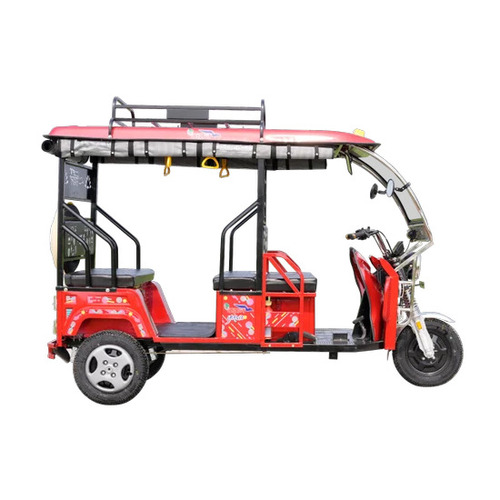
Noida, Uttar Pradesh, India
YUVA E-Passenger manufacturer from Faridabad India producing a 9-10 seater electric passenger e-rickshaw powered by a 1.5-2.0 kW BLDC motor with 48V/72V lithium-ion or lead-acid battery options, delivering 80-120 km range per charge, hydraulic brakes and a rust-resistant body, engineered to internat...
Shipping Information
Exporter details revealed after verified importer registration
YUVA E-Passenger is a 9-10 seater electric rickshaw built for city, rural, and intercity passenger transport, powered by a 1.5-2.0 kW BLDC motor and a 48V/72V lithium-ion or lead-acid battery pack delivering 80-120 km of range per charge. Its rust-resistant coated body, hydraulic brakes, and telescopic front suspension with leaf spring rear suspension are engineered for daily commercial operation across varied road conditions, from smooth urban routes to rougher rural and intercity stretches. Manufactured in Noida, Uttar Pradesh, part of the Delhi-NCR belt that has become one of India's most active clusters for electric three-wheeler manufacturing, the E-Passenger is built for last-mile mobility, campus transportation, tourist transport, and community transport operators. For international fleet buyers and mobility operators, this means an export-ready passenger e-rickshaw backed by NCR's concentrated EV component supply base and testing infrastructure.
| Attribute | Details / Value |
|---|---|
| Motor Type | BLDC Motor |
| Max Power | 1.5-2.0 kW |
| Battery Type | Lithium-ion or Lead Acid (optional) |
| Battery Capacity | 48V / 72V (customizable) |
| Range | 80-120 km per charge |
| Max Speed | 25-30 km/h |
| Charging Time | 4-6 hours |
| Seating Capacity | 9-10 passengers |
| Brake System | Hydraulic brakes |
| Suspension | Front: Telescopic; Rear: Leaf Spring |
| Length | 2950 mm |
| Width | 1350 mm |
| Height | 1860 mm |
| Wheelbase/Cabin Width | 1100 mm |
| Interior Length | 2850 mm |
| HS Code | 8703.80.00 (electric passenger vehicles), confirm with CHA |
Lithium-ion battery packs weigh less for the same capacity, charge faster within the standard 4-6 hour window, and hold up better over repeated daily charge cycles, which matters for high-utilization routes like campus shuttles or intercity runs where the vehicle needs to return to service quickly. The tradeoff is a higher upfront cost, which fleet buyers typically recover through lower per-cycle degradation over the vehicle's operating life.
Lead acid batteries cost less upfront and remain a familiar, easily serviceable option in markets where local lithium battery service infrastructure isn't yet established. This suits operators prioritizing lower initial fleet investment or working in regions without ready access to lithium battery replacement and service networks, accepting a heavier vehicle and somewhat shorter effective battery life in exchange.
Noida sits within the Delhi-NCR industrial belt, home to multiple established electric three-wheeler manufacturers and homologation infrastructure including ICAT (International Centre for Automotive Technology). This concentration of EV-specific component suppliers, battery assemblers, and vehicle testing facilities supports consistent build quality and shorter production cycles compared to regions without dedicated EV manufacturing infrastructure. NCR's road, rail, and air connectivity supports both domestic fleet delivery and international export shipment.
Fully assembled units shipped in protective crating for container loading. CKD (Completely Knocked Down) or SKD (Semi Knocked Down) shipment options available for buyers with local assembly capacity or import duty considerations that favor component-level import over fully built units. Battery packs shipped separately per international lithium battery transport regulations where applicable.
Built to global standards for export readiness. ARAI (Automotive Research Association of India) or ICAT type approval documentation, ISO 9001 certified manufacturing facility, CE marking documentation for EU market entry where applicable, UN38.3 certification for lithium-ion battery transport compliance. Confirm specific destination-market homologation and passenger vehicle safety certification requirements (such as DOT/FMVSS for the US or equivalent regional standards) before finalizing an export order.
The YUVA E-Passenger seats 9-10 passengers, making it suited to last-mile mobility, campus transportation, tourist transport, and community transport operations where higher passenger throughput matters.
Lithium-ion suits high-utilization routes needing fast charging and better long-term cycle life, at a higher upfront cost. Lead acid suits operators prioritizing lower initial investment or working in markets without established lithium battery service infrastructure.
The vehicle delivers 80-120 km of range per charge, depending on battery configuration, passenger load, and terrain, with a standard charging time of 4-6 hours.
The vehicle is engineered for all three: its telescopic front and leaf spring rear suspension, rust-resistant body, and hydraulic brakes are built to handle rougher rural and intercity road conditions in addition to smooth urban routes.
Electric passenger vehicles, including e-rickshaws, are generally classified under HS code 8703.80.00, distinct from the 8704.90 code used for electric goods/cargo vehicles. Confirm the exact classification with your customs broker, since seating capacity and vehicle category can affect classification in some destination markets.
Connect with EXP01027 and thousands of verified Indian exporters on Navi Exports