-
-
-
-
-
-
-
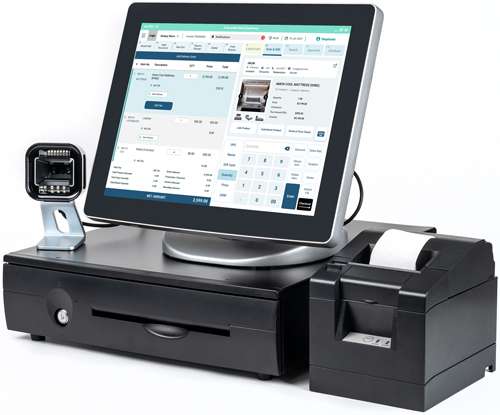
Retail POS Systems
Chennai, Tamil Nadu, India
Retail POS Systems company from Chennai India offering omnichannel retail software with billing and inventory integration support.
Shipping Information
Exporter details revealed after verified importer registration
Retail POS Systems are digital point-of-sale solutions designed to help retail businesses manage checkout transactions, billing, product sales, barcode scanning, payments, discounts, returns, customer records, cashier activities, inventory synchronization, and sales reporting through a centralized platform. A modern retail POS system can connect front-counter sales operations with products, stock records, customers, employees, stores, and business reports, helping retailers establish more structured and efficient sales workflows.
The system can support product and SKU management, barcode scanning, billing, multiple payment methods, taxes, discounts, promotions, returns, exchanges, customer profiles, loyalty programs, cashier management, shift tracking, cash register operations, inventory updates, purchase records, sales analytics, and multi-store management. Features and workflows can be configured according to retail format, business size, product range, number of stores, operational processes, and integration requirements.
As comprehensive Retail POS Systems for Stores and Multi-Location Businesses, the solution is suitable for supermarkets, grocery stores, fashion retailers, electronics shops, pharmacies, convenience stores, specialty retailers, franchise businesses, department stores, and other retail organizations seeking centralized checkout, sales, inventory, customer, and store management.
| Attribute | Details |
|---|---|
| Solution Name | Retail POS Systems |
| Main Category | Business Services & Equipment |
| Sub Category | Business Software Solutions |
| Core Modules | POS Billing, Product Management, Barcode Scanning, Payments, Customers, Inventory, Cashiers, Stores & Sales Reporting |
| Sales Functions | Checkout, Billing, Discounts, Promotions, Returns, Exchanges, Refunds & Transaction History |
| Product Identification | SKU, Barcode, QR Code, Product Code & Custom Product Identifiers |
| Payment Options | Cash, Cards, Digital Payments, Split Payments, Store Credit or Other Supported Payment Methods |
| Store Support | Single Store, Multiple Stores, Franchise Locations, Branches & Centralized Retail Operations |
| Deployment Options | Cloud-Based, Web-Based, Desktop, Mobile or Customized Based on Business Requirements |
| Integration Options | Inventory Software, Accounting Systems, ERP, CRM, E-commerce Platforms, Payment Services, APIs & Third-Party Applications |
| Customization | Billing Workflows, Invoice Formats, Product Fields, Discounts, User Roles, Reports, Integrations & Branding |
Retail POS Systems can centralize checkout and sales operations while providing cashiers, store managers, administrators, business owners, and authorized users with structured access to relevant transaction, product, customer, inventory, and store information.
Retail POS software can help cashiers search products, scan barcodes, add items to transactions, apply authorized discounts, calculate applicable taxes, accept supported payment methods, generate receipts, and complete checkout transactions through a structured sales interface.
The system can support configurable workflows for product returns, exchanges, refunds, store credit, and transaction adjustments according to business policies and user permissions. Previous sales transactions can be referenced where supported by the selected system configuration.
Barcode functionality can support faster product identification during checkout, goods receipt, stock counting, product lookup, and other retail activities. Depending on system configuration and hardware compatibility, standard barcode scanners and other supported identification technologies can be integrated with the POS platform.
Retailers can maintain structured product records containing SKUs, product names, categories, brands, variants, selling prices, cost prices, tax settings, barcode details, units, inventory quantities, and other configurable product attributes.
When a retail transaction is completed, the POS system can update corresponding inventory quantities according to configured workflows. This helps maintain more consistent stock visibility between checkout activities and inventory records.
Retailers can configure minimum stock levels and reorder thresholds for selected products. Low-stock notifications and inventory reports can help purchasing teams and store managers identify products that may require replenishment.
The POS system can maintain customer profiles containing contact information, transaction histories, purchase patterns, loyalty information, and other permitted data according to system configuration and applicable privacy requirements.
Retailers can configure loyalty points, membership benefits, promotional pricing, product discounts, category discounts, coupons, special offers, and other promotional rules based on business requirements.
Retail businesses operating multiple stores, branches, franchise locations, or sales counters can use a centralized POS platform to manage products, users, transactions, prices, inventory, customers, and reports across locations according to configured permissions and operational structures.
Authorized users can access store-specific or consolidated reports covering sales, transactions, inventory, products, cashiers, payments, and other business metrics depending on the selected system configuration.
Retail POS Systems can provide separate user accounts and role-based permissions for cashiers, supervisors, store managers, administrators, and business owners. The system can maintain transaction histories and operational activities associated with authorized users.
Retail POS Systems can support businesses across different retail formats that require structured billing, checkout management, barcode scanning, inventory synchronization, customer records, cashier administration, and sales reporting.
When selecting a Retail POS System, businesses should evaluate whether the platform supports their actual checkout processes, product catalog, payment methods, inventory operations, customer management requirements, store structure, hardware, reporting needs, integrations, and future scalability.
A Retail POS System can connect checkout transactions with product records, inventory quantities, customers, payments, cashiers, and reports. This helps retailers reduce dependence on disconnected billing tools, spreadsheets, and manual transaction records.
Structured reports and dashboards can provide visibility into sales, transactions, payment methods, product performance, store performance, cashier activities, discounts, returns, and other retail metrics according to system configuration.
Barcode scanning, fast product search, configurable payment methods, structured discounts, automated calculations, and receipt generation can support faster and more consistent checkout processes.
A scalable Retail POS System can support additional products, SKUs, users, cashiers, sales counters, stores, branches, customers, integrations, and transaction volumes as business requirements evolve.
The system can be configured according to specific business requirements, including product structures, checkout workflows, invoice formats, discounts, promotions, tax settings, payment methods, user roles, approval rules, customer programs, dashboards, and reports.
Depending on API availability and technical compatibility, Retail POS Systems can integrate with inventory management software, accounting platforms, ERP systems, CRM applications, e-commerce stores, marketplaces, payment services, loyalty platforms, shipping systems, and third-party APIs.
The solution can be offered as a cloud-based POS platform, web-based retail application, desktop software, mobile POS solution, SaaS product, dedicated enterprise system, or customized retail application according to technical and operational requirements.
Retail POS Systems can incorporate secure authentication, role-based access controls, encrypted data transmission, activity logs, transaction histories, session management, backup processes, and recovery procedures according to the selected architecture and project requirements. Quality assurance can include functional testing, checkout workflow validation, barcode testing, payment integration testing, inventory synchronization testing, performance testing, security reviews, user acceptance testing, and deployment validation within the agreed implementation scope.
A Retail POS System is a digital point-of-sale solution designed to help retailers manage checkout transactions, billing, product sales, barcode scanning, payments, discounts, returns, customers, cashiers, inventory updates, and sales reporting through a centralized platform.
Retail POS Systems can be used by supermarkets, grocery stores, fashion retailers, footwear shops, electronics stores, pharmacies, convenience stores, department stores, beauty retailers, furniture stores, specialty shops, franchise networks, and multi-location retail businesses.
Yes. Depending on system configuration, inventory quantities can be updated when sales, returns, exchanges, stock receipts, transfers, or adjustments are recorded in the system.
Yes. Retail POS Software can support barcode and QR code scanning for product identification, checkout, product lookup, stock counting, and other retail operations based on system configuration and hardware compatibility.
Yes. Depending on system architecture and configuration, a Retail POS System can support multiple stores, branches, franchise locations, sales counters, users, products, inventory records, and consolidated or location-specific reporting.
Yes. The system can support configurable discounts, promotional pricing, coupons, loyalty points, membership benefits, product offers, category discounts, and other promotional rules according to business requirements.
Yes. Depending on API availability and technical compatibility, Retail POS Systems can integrate with accounting software, ERP platforms, CRM applications, inventory systems, e-commerce stores, marketplaces, payment services, loyalty platforms, and other third-party applications.
Connect with EXP01023 and thousands of verified Indian exporters on Navi Exports