-
-
-
-
-
-
-
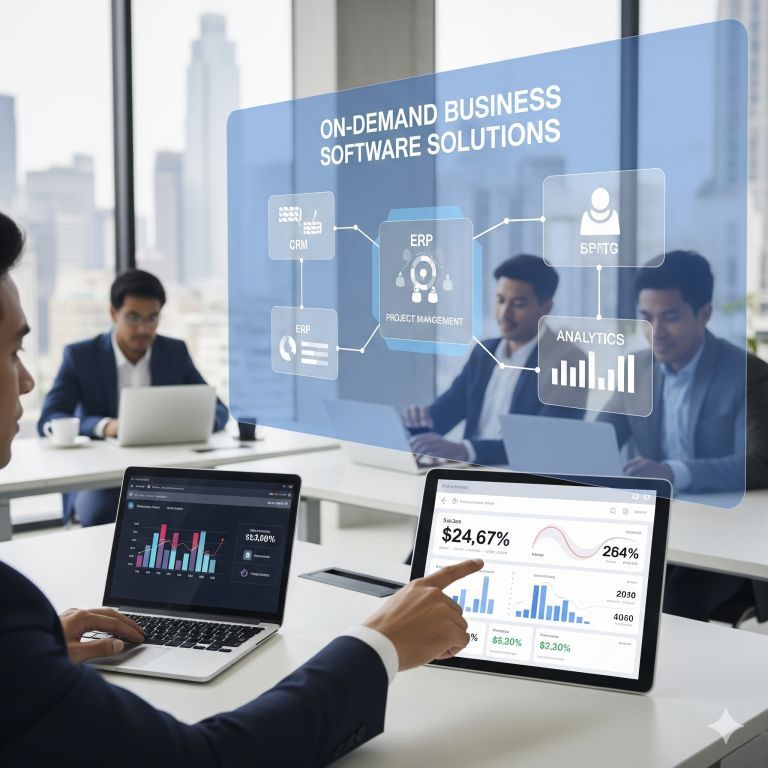
On Demand Business Software Solutions
Jaipur, Rajasthan, India
ERP, CRM, HR & Payroll, Accounting, Inventory, Project Management, Business Intelligence, and more. Designed to improve efficiency, automate processes, and support data-driven decision-making.
Quantity & Pricing
| Quantity Range | Unit Type | Price Range |
|---|---|---|
| 0-100 | piece | 50000 |
Shipping Information
Exporter details revealed after verified importer registration
On-Demand Business Software Solutions are custom-developed applications designed to address specific operational requirements, automate business processes, improve productivity, and support scalable digital growth. Unlike generic off-the-shelf software, on-demand business applications can be tailored around an organization's workflows, users, integrations, reporting requirements, security needs, and long-term business objectives.
Our business software solutions can include custom ERP systems, CRM platforms, inventory management software, order management systems, workflow automation applications, HR and employee management platforms, field service software, distributor management systems, customer portals, vendor management platforms, analytics dashboards, SaaS products, and industry-specific business applications.
As a provider of On-Demand Business Software Solutions for Custom Business Needs, we support startups, SMEs, enterprises, manufacturers, distributors, retailers, healthcare organizations, logistics companies, service businesses, and other organizations looking to digitize operations and build software around their actual business processes.
| Attribute | Details |
|---|---|
| Solution Name | On-Demand Business Software Solutions |
| Main Category | Business Services & Equipment |
| Sub Category | Business Software Solutions |
| Solution Types | Custom ERP, CRM, SaaS Platforms, Workflow Automation, Inventory Management, Order Management & Business Applications |
| Deployment Options | Cloud-Based, Web-Based, Mobile, Hybrid or On-Premise Based on Project Requirements |
| Integration Options | Payment Gateways, ERP Systems, CRM Platforms, APIs, Accounting Software, Cloud Services & Third-Party Applications |
| Supported Platforms | Web Applications, Mobile Applications, Administrative Portals, Customer Portals & SaaS Platforms |
| Customization | Features, Workflows, User Roles, Dashboards, Reports, Integrations, Branding & Business Logic |
| Target Users | Startups, SMEs, Enterprises, Manufacturers, Retailers, Distributors & Service Businesses |
On-demand business software can be developed for organizations across different industries and operational models. Each solution can be configured according to specific workflows, user roles, approval processes, reporting requirements, and integration needs.
When selecting an on-demand business software solution, buyers should evaluate whether the proposed system aligns with actual business processes, supports future scalability, integrates with existing platforms, protects business data, and provides a practical path for ongoing maintenance and enhancement.
Every organization has different processes, approval structures, customer journeys, reporting requirements, and operational challenges. Custom on-demand business software enables companies to build technology around these specific needs rather than forcing teams to adapt their processes to rigid, generic software.
A well-designed business software platform can reduce repetitive manual work, centralize operational data, improve collaboration, provide real-time visibility, and help management make more informed decisions through structured dashboards and reports.
Custom business applications can evolve as business requirements change. New modules, workflows, integrations, dashboards, automation rules, and user roles can be introduced based on organizational growth and emerging operational needs.
Businesses can benefit from workflow-specific functionality, centralized data management, improved process automation, third-party integrations, scalable architecture, role-based access, customized reporting, and greater control over their digital operations.
Solutions can be developed as complete custom projects, minimum viable products (MVPs), dedicated development engagements, module-based implementations, SaaS platforms, modernization projects, or ongoing software development partnerships according to project requirements.
Business software solutions can be developed using modern web, mobile, cloud, database, and API technologies selected according to the project's functional and technical requirements. Quality assurance may include functional testing, integration testing, performance testing, security reviews, user acceptance testing, and deployment validation based on the agreed project scope.
On-Demand Business Software Solutions are customized software applications developed around specific business processes, operational requirements, user roles, integrations, and growth objectives rather than relying entirely on standardized off-the-shelf software.
Custom solutions can include ERP systems, CRM platforms, inventory management software, order management systems, workflow automation tools, HR platforms, vendor portals, distributor management systems, customer portals, SaaS applications, and industry-specific software.
Yes. Depending on technical compatibility and project requirements, custom business software can integrate with existing ERP systems, CRM platforms, payment gateways, accounting software, cloud services, APIs, and other third-party applications.
Yes. An MVP can be developed with essential features to validate workflows, gather user feedback, test market demand, and establish technical foundations before expanding into a complete business software platform.
Development timelines depend on project scope, feature complexity, integrations, number of user roles, platform requirements, testing needs, and deployment architecture. A detailed timeline should be established after requirements analysis and project planning.
Connect with EXP01002 and thousands of verified Indian exporters on Navi Exports