-
-
-
-
-
-
-
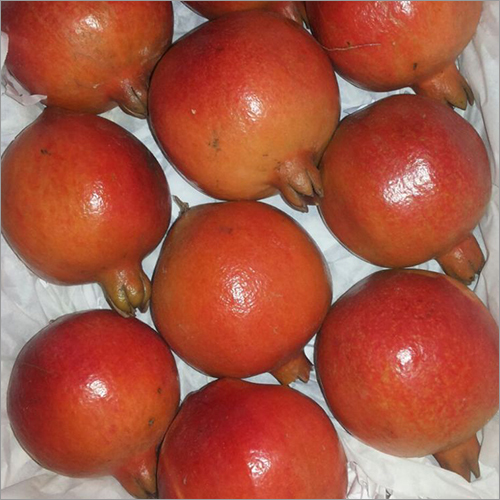
Fresh Pomegranate Supplier Long Shelf Life Export Fruits
Mumbai, Maharashtra, India
Fresh pomegranate supplier long shelf life export fruits delivering durable premium fruits for Europe and Middle East buyers.
Shipping Information
Exporter details revealed after verified importer registration
This is Bhagwa variety pomegranate, the one variety that actually dominates India's export trade because it's built for the job. Bright red skin, soft edible arils, and a shelf life of 30 to 60 days when held at 5 to 7°C, long enough to survive a full ocean freight journey without the fruit arriving degraded. Other Indian varieties like Ganesh or Arakta taste fine but don't hold up the same way over weeks in transit, which is why they mostly stay in the domestic market while Bhagwa goes to sea. Solapur, alongside Nashik and Sangli, grows the bulk of it, and this belt's combination of packing infrastructure and established cold storage is a big part of why the shelf-life numbers actually hold up by the time a shipment reaches a buyer's warehouse.
| Attribute | Details / Value | Compliance / Standard |
|---|---|---|
| Variety | Bhagwa (primary export variety) | Other varieties available on request |
| Grade | Export Grade A, uniform, blemish-free, size-graded | 200 to 500g per fruit, 50 to 90mm diameter |
| Brix Level | 16 to 18% | Confirmed via Certificate of Analysis |
| Shelf Life | 30 to 60 days at 5-7°C, 90-95% relative humidity | Requires unbroken cold chain |
| Harvest Season | Peak season (Hasta Bahar) September to December | Multiple cropping cycles allow near year-round supply |
| Packaging | Corrugated cartons, individual fruit netting or tray inserts | Ventilated for airflow |
| Traceability | APEDA Hortinet farm-origin tracking | Mandatory for export clearance |
| HS Code | 0810.90 (International) / 08109010 (India ITC-HS) | WCO Harmonized System |
Bhagwa itself is the reason India's pomegranate export trade grew the way it did. Before this variety spread widely after 2003, the area under pomegranate cultivation in India was a fraction of what it is now, and it more than doubled within about fifteen years largely on the strength of Bhagwa's yield, disease resistance, and most importantly, its shelf stability. Solapur's semi-arid climate and well-drained soil suit the crop well, and the concentration of growers, packhouses, and cold storage facilities in this belt means fruit moves from orchard to pre-cooling to export packing without the kind of long domestic transit that would eat into that carefully managed shelf-life window before the fruit even leaves India.
The Middle East is the largest single market, accounting for over half of India's total pomegranate export volume, driven by steady year-round demand from wholesale importers and retail distributors across the Gulf. The Netherlands functions as Europe's main entry point for Indian pomegranate, from where it redistributes to other EU markets, so a Netherlands-based importer is often buying for a wider European footprint than their own market alone. Bangladesh and Nepal round out demand as steadily growing nearby markets, generally served by road and shorter sea routes given the geographic proximity, which also means a shorter cold-chain window is needed compared to the Middle East or Europe run.
Mainly shelf life. Bhagwa holds up for 30 to 60 days under proper cold storage, which is long enough to survive ocean freight to distant markets. Other Indian varieties like Ganesh or Arakta are good eating pomegranates but don't have the same storage stability, so they're mostly sold domestically or exported by road to nearby countries instead.
Unbroken cold chain at 5 to 7°C with 90-95% relative humidity from the moment the fruit is pre-cooled through to the buyer's own storage. Any gap in that chain, a delayed truck, a warm loading dock, shortens the usable window, sometimes substantially, even if the fruit itself was graded correctly at harvest.
Hortinet is APEDA's system for tracking pomegranate back to its originating farm, a mandatory requirement for export clearance rather than an optional certification. It exists partly for food safety traceability and partly to support MRL compliance verification, since it links a shipment back to a specific, registered growing source.
India's multiple cropping cycles allow near year-round supply, but the Hasta Bahar harvest from September to December produces the highest quality fruit and drives peak export volumes. Off-season supply is available but generally comes at a higher price given more limited availability.
The Netherlands functions as a major entry and redistribution point for produce entering the European Union, so a Dutch importer is often buying on behalf of onward distribution across several EU countries rather than for Dutch consumption alone. This is common in European fresh produce trade generally, not specific to pomegranate.
Connect with EXP01002 and thousands of verified Indian exporters on Navi Exports